
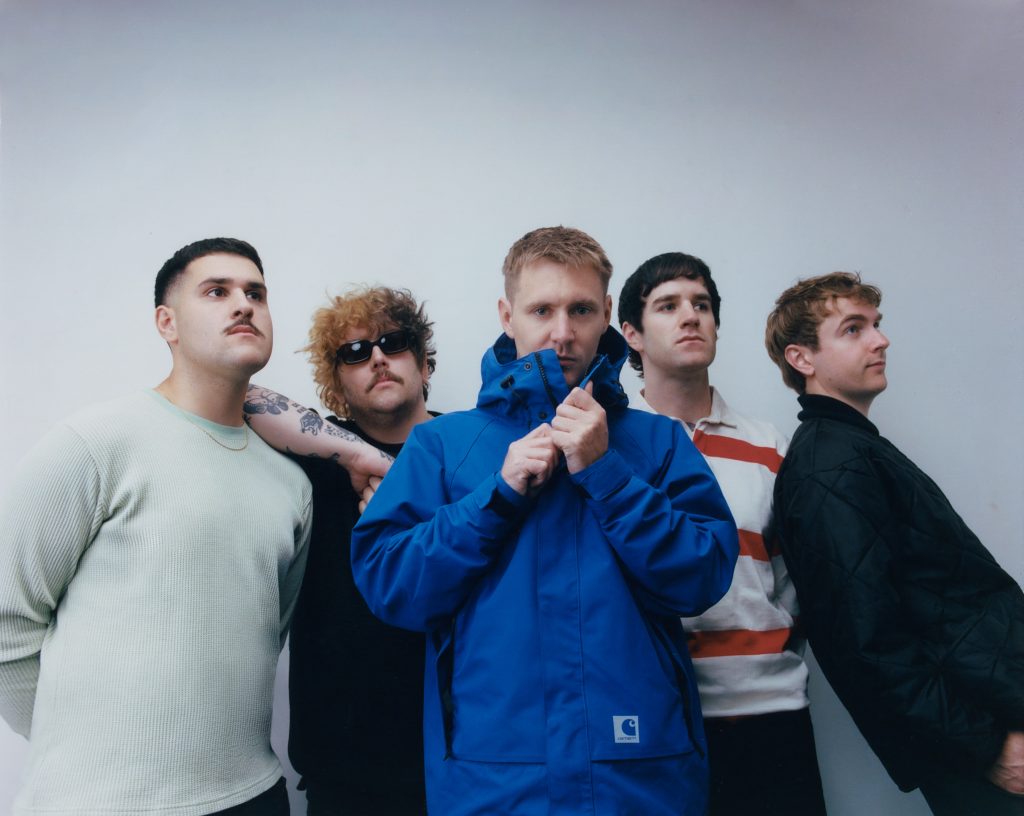


Militarie Gun are a truly uncategorizable band. Led by vocalist Ian Shelton, the band’s debut full-length, Life Under The Gun, is almost impossible to describe without bouncing between contradictions. Is it abnormally aggressive pop music or is it unusually catchy hardcore? Is it deeply intellectual or is it satisfyingly primal? Is it a vulnerable attempt to unpack lifelong cycles of hurt, or is it a collection of world-beating, absurdist punk anthems? In the end, the answer is obvious: it’s all of it. It’s Militarie Gun.
Since forming in 2020, the group have been releasing music and touring at a startling rate, and while Life Under The Gun feels like a culmination of this recent hard-earned momentum, the record is inextricably linked to Shelton’s past. “I grew up in a household with family members struggling with addiction,” he explains. “It was an oppressive force. We were always wondering, ‘Is it going to be a good day or a bad day? Are the cops going to come today? What am I going to come home to after school?’ You could only escape it for so many hours at a time.” The challenges of his homelife were only exacerbated by living in Enumclaw, WA, a sparsely populated rural suburb where Shelton spent his formative years longing for a way out. In this difficult and stifling environment, the roots of Life Under The Gun began to grow. As he began to pick up instruments, play in bands, and write his own songs, music quickly became a vital outlet for self-expression, but Shelton couldn’t shake the idea that it was also a literal escape route.
And he was right. After high school, Shelton bounced around the Pacific Northwest before eventually landing in Seattle, where he founded the pummeling hardcore outfit, Regional Justice Center. The band released two critically acclaimed full-lengths, toured around the world, and began allowing Shelton to live some of the things he’d set his sights on as a child. Parallel to these musical successes, he was also pursuing his other love: film. While in Seattle, Shelton began directing music videos for his bands and soon had credits under his belt for other artists like Angel Du$t, Drug Church, Supercrush, and more. The directing was going so well that he moved to Los Angeles with plans to put music on the backburner to pursue filmmaking full-time. “Then in 2020 everything got derailed,” he says. “I felt like I was heading into the final year of RJC and then I was going to move on from music, but when everything shut down that just left me with my most immediate interest, which was songwriting.”
What followed was a flurry of activity that still hasn’t let up. Shelton’s restless creative drive took over and he spontaneously wrote the first songs that became Militarie Gun, which were followed by more songs…and then more and more. The sound was decidedly new for him: still firmly rooted in punk and hardcore but more hook-driven, pulling from influences like Guided By Voices, Fugazi, or The Jesus Lizard. Shelton quickly recorded Militarie Gun’s 2020 debut EP, My Life Is Over, by himself, then rounded out the lineup with guitarists Nick Cogan and William Acuña, and drummer Vince Nguyen (Max Epstein played bass on Life Under The Gun). 2021 saw the release of the dual All Roads Lead To The Gun EPs and the start of a seemingly endless run of tour dates. Then in 2022, Militarie Gun teamed with Dazy for the wildly received collaborative single “Pressure Cooker,” which was soon followed by the band signing to Loma Vista Recordings and releasing a deluxe edition of the All Roads Lead To The Gun EPs that included even more new material. All of this along with Shelton’s production work and guest appearances with groups like MSPAINT, Public Opinion, and Cold Mega.
Militarie Gun soon had the makings of Life Under The Gun: the kind of debut album that feels like a true arrival, one forged by a lifetime of experience and effort that’s now allowed an artist to fully come into their own. Engineered by Taylor Young at The Pit Recording Studio, the album’s 12 tracks take all of the best parts of Militarie Gun’s earlier work and amps them up to the highest possible degree. It sounds massive without sacrificing the punk spark–full of driving drums, distorted bass lines, and of course Shelton’s instantly recognizable roar–only this time everything is bigger and even catchier. “This is what I thought we sounded like all along,” Shelton laughs. “It’s always felt like a melody-forward band to me, but I think now we’re finally achieving what I was always setting out to do.”
The clarity of his singular vision is palpable in each song’s deft blend of aggression and accessibility, but Shelton also cites collaboration as essential to his process–whether with his band members or outside sources like Young and James Goodson of Dazy, who sings harmonies on much of the album. In the end, it’s no surprise that his lifelong desire to find connection through art has manifested in the direction of his own music. “A huge part of it is just about sharing your energy with other people,” Shelton says. “Sometimes with punk that’s coming from anger, but it’s exciting to do that with the melodic side as well, to take something that’s stuck in your head and try to make it stuck in someone else’s, too.”
Life Under The Gun opens with the razor sharp guitars and tremendous chorus of the ADHD anthem “Do It Faster,” making it clear that Militarie Gun haven’t just embraced melody, they excel at it. The song’s impatient lyrics capture Shelton’s hyperactive creativity and echo all the way back to his youth spent imagining the life he now leads. “Very High” follows and somehow offers an even bigger chorus, while continuing to draw his past and present together in a way that feels both critical and empathetic. “It’s just about addiction,” Shelton says. “It’s about feeling bad and reaching for something to change that. I started exploring drugs as an adult and it made me look back on my childhood in a different way.” On tracks like “Will Logic,” “Return Policy,” and “Think Less,” he interrogates interpersonal relationships through this distinctly blunt and self-aware lens, dipping into spite or anger only to turn the blame back on himself again.
On “Never Fucked Up Once,” Shelton demonstrates this willingness to approach the third rail, juxtaposing some of the album’s most darkly comedic lyrics with its most overt pop-rock sensibilities. Much of Life Under The Gun feels informed by this need for human connection, but also the messiness that often comes with it. “Sway Too” and “See You Around” showcase Militarie Gun pushing themselves to be as tuneful as possible, especially on the latter’s mellotron-led balladry, but they also pose some of the album’s most difficult questions about what happens when we hurt one another. “It would be easy to avoid talking about how I’ve been hurt or how I’ve hurt other people,” Shelton explains, “but I think it’s important to make something that’s true and has teeth. Sometimes when you feel so aggressively against something, you need to stop and wonder if it might apply to you.”
Life Under The Gun closes with its title track, two minutes and 46 seconds of widescreen punk that pivots from pounding aggression to a triumphant climax of windmill-able guitars and layered harmonies. Shelton sings the final refrain “a life of pursuit ends up pursuing you” like an urgent reminder to himself: move forward or get swallowed up–your past might shape you, but it doesn’t have to define you. “I think the best case scenario is you learn from the things you’ve been through instead of continuing that cycle,” he says. The song’s final lone chord rings out like a question, asking if the listener is ready for the changes ahead. It’s a fittingly hopeful-yet-ambiguous ending for the debut album from a band that’s already come so far and evolved so much–but whose story has only just begun.
Death Lens
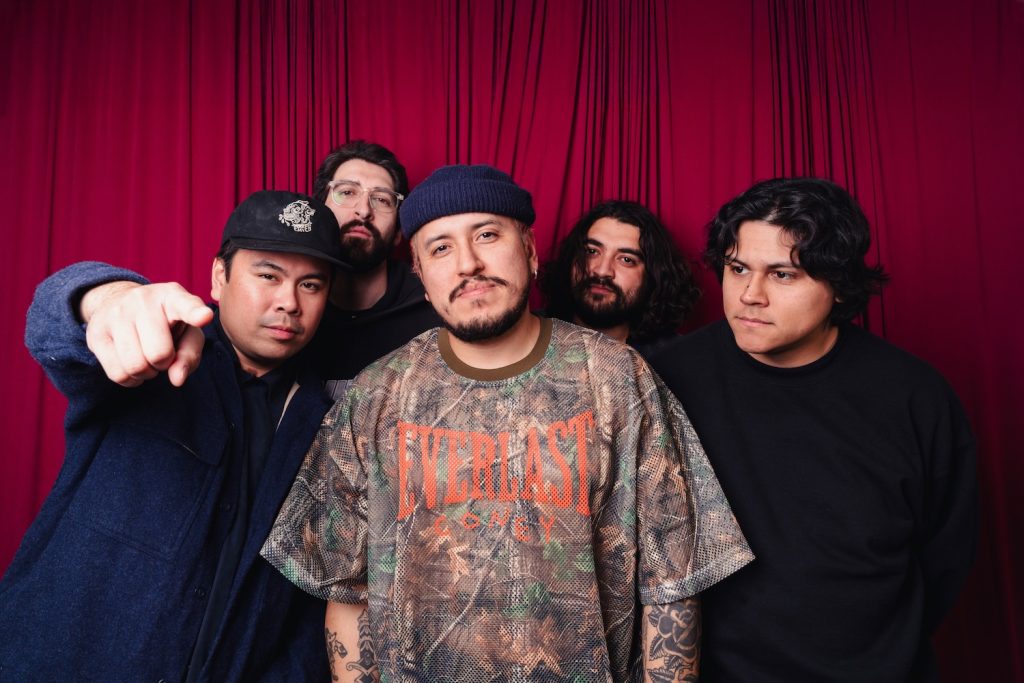
Death Lens want to be in your ear at all times. They hide their ferocity underneath a thick veneer of style until the energy and chaos of one of their live shows leaves every audience member disarmed and forever changed. Off the strength of 2022’s No Luck, tours with Bad Religion, Militarie Gun, Four Year Strong, and the support of their hometown, Death Lens signed to Epitaph Records and released their new album, Cold World on May 3rd.
For Death Lens, it’s all been building to this. Cold World is a departure from the early styles Death Lens mimicked as a young band, transmuting them into matured and brawny post-hardcore tinged rock songs.
On record, Death Lens have an established habit of writing hard-nosed rock that combines West Coast reverbed-out surf punk with tight and bouncy Britrock, deceptively characterizing the band as exclusively chill and vibe-focused when live, a Death Lens show has all the energy of hardcore. Slick guitar sonics and sugary backing vocal harmonies that feel like the best parts of indie punk and shoegaze are the foundation of their style, but in a 200 capacity room, Death Lens brings the same winning concoction as Turnstile and Militarie Gun. In other words, these are the kinds of songs that become the soundtrack to enduring memories of nights of drunken, sweat-drenched singalongs.
MILLY
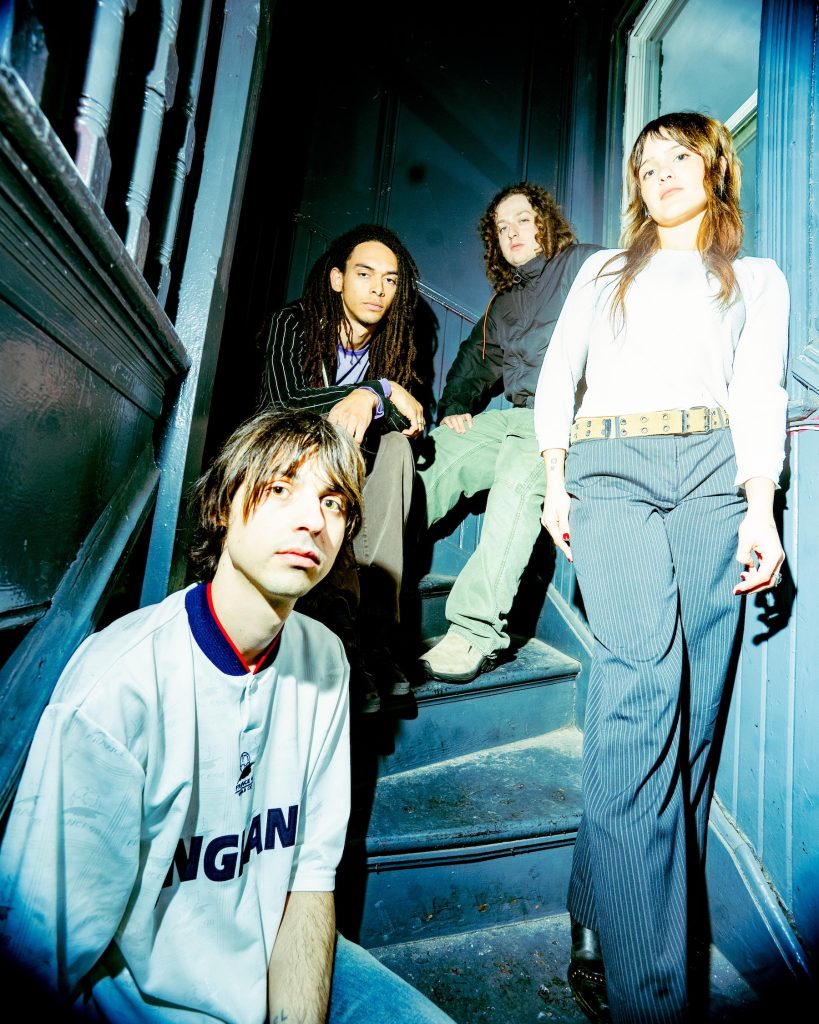
Originally the solo project of Brendan Dyer, his relocation from Connecticut to Los Angeles saw the band expand to include collaborator Yarden Erez. After signing to Dangerbird Records, 2019 saw the band on tour with Swervedriver & DIIV, and in 2021 they released their acclaimed EP Wish Goes On.
To understand Eternal Ring, you have to go back to Dyer’s childhood. Learning guitar and drums from his uncle, a musician, from the age of ten, Dyer was one of the only young people in his rural Connecticut town interested in anything other than sports and other stereotypical markers of American life. Naturally, Dyer began to gravitate towards emo — the closest thing many teens have to outsider art — as an art form he could identify with, bands like Hawthorne Heights subconsciously laying the groundwork for the music he would make as an adult. “It probably only lasted a year or two that I was interested in that sort of thing, but now I feel like it’s become a thing in my life where it’s like, full circle,” he says. “When we were writing this album, and touring before writing this album, I was reconnecting with a lot of the music that I was listening to in my youth and realizing that there was a reason why I liked this music so much.”
The Milly of Eternal Ring, though, is a vastly different project from the one Dyer began in his childhood bedroom. Where the band’s old songs were dazed and gorgeously laconic, Eternal Ring is muscular, punchy, almost alarmingly direct. You only need to hear album opener and debut single “Illuminate” to understand the change: slipping quickly from emo balladry into something heavy and intoxicatingly intense, it’s a clear marker that this is the work of a tighter, more dynamic Milly. There is no slack to these songs — even the nine-minute “Stuck In The Middle” is an impossibly taut endurance work, jumping from emotive build to gut-wrenching squall in a second.
