

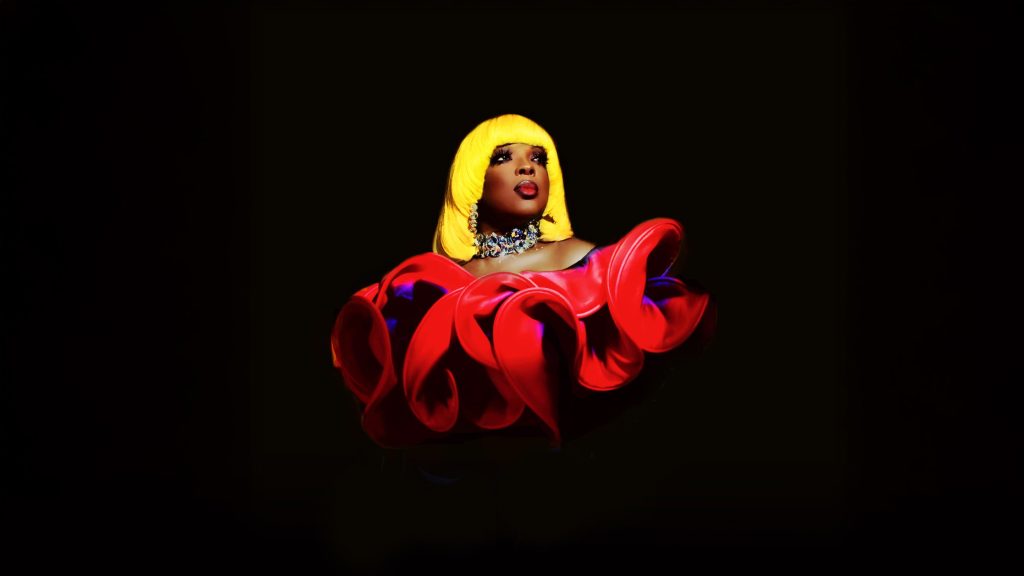


Lady Wray is making music on her own terms. With an almighty voice, soul-stirring lyrics, and a magnetic personality, the singer-songwriter continues to elevate her artistry while pushing the boundaries of soul and R&B.. Lady Wray’s music reflects her appreciation for her family, her faith, and her renewed love for herself—all of which drive her anticipated third album Cover Girl (out September 26 via Big Crown Records).
The celebratory Cover Girl takes listeners on a free-spirited joyride glittered with ‘60s and ’70s-inspired soul and disco, ‘90s hip-hop and R&B, and gospel. Following the healing journey that was 2022’s Piece of Me, the singer has performed on The Late Show With Stephen Colbert and NPR’s Tiny Desk, spent ample time on the road touring, and was sampled on London electronic producer Fred Again’s 2024 album, Ten Days. After this period of growth, Lady Wray is now ready to let her hair down and embrace all of what life has to offer her. The singer reunited with producer Leon Michels for the record, who helped fuse the singer’s raw soul sensibility with a modern R&B sound. The outcome of Cover Girl is effortless, a reflection of the pair’s longtime collaboration that extends over a decade.
“I’ve gravitated more towards love and self-care with this album. Piece of Me was realizing that I was going to be a mother, and all those feelings were on my heart,” Lady Wray says. “Now I’m able to sit back and be a real boss. I got my career, my motherhood, and my marriage by the horns. I’ve grown into this more self-aware and beautiful flower for Cover Girl.”
Lady Wray’s revived bliss is best captured in the album’s lead single, “You’re Gonna Win”. A call back to the carefree Studio 54 era, the groovy track celebrates love on—and beyond— the dancefloor. “I do not care who came before me / After me they’ll be none / Say it loud no one can measure / You’re my favorite company”, she teases before the choir takes the chorus to delightful heights. “This song is my night out. This is my sexy time,” Lady Wray explains. “I can get dressed, call my friends, and we’re gonna go out, dance, and have a great time.”
Love is a major driving force on Cover Girl, as seen with “Time” and “My Best Step”—two adoring odes to Lady Wray’s husband. Wrapped in ‘60s-inspired soul, both of these tunes are a testament to love’s hardships, with Lady Wray’s tender vocals beaming with admiration for her relationship.
Cover Girl’s title track is one of the album’s most vulnerable moments. The piano-driven ballad puts Lady Wray’s powerful, church-refined vocals on full display as she details the discovery of finding herself again: “I lost myself trying to please someone else / I want to be me again.”
“It stems from a nickname that a family friend gave to me as a kid. She would always call me ‘Cover Girl’, because my hair would be done and I had on the cutest outfits. I was a little lady!” Lady Wray explains. “As I grew up and got into the music business, I lost that happy part of me. I see that happiness in my daughter, who’s just beautiful, talented, and smart. ‘Cover Girl’ is me going back to that little girl. It’s about getting back to loving yourself, healing, and taking things one day at a time.”
Lady Wray’s diaristic approach to music started at an early age, singing in the church choir at age 8. At home, her parents introduced her to the inspiring sounds of Whitney Houston, Michael Jackson, Stevie Wonder, The Clark Sisters, and Shirley Caesar. Lady Wray’s father was also a singer: “He had a very distinctive voice, and I feel like the ancestors had given it to him, like they did with me. He passed the torch down to me, and I’m going to keep it going.”
At age 16, Wray was introduced to Missy Elliott. Her impressive on-the-spot performance in her living room of SWV’s “Weak” led to her becoming the first recording artist on Elliott’s The Goldmind Inc. label. “Make It Hot”, the lead single from her 1998 debut album of the same name, peaked at No. 5 on the Billboard Hot 100. In 2010, Wray received an enlightening career shift when she provided unforgettable vocals on The Black Keys’ 2010 album, Brothers. “When I worked with these guys, they put me in the forefront. And I hadn’t felt that in so long,” Lady Wray says. “I always felt like Cinderella. I know I have what it takes, but I’m in the basement, and they won’t let me out. They shined this light on me. A light bulb went off in my head and I said, ‘This is what I’m gonna do’”.
Following that moment, Lady Wray signed to Big Crown Records in 2016 and released two retro-rooted albums—2016’s Queen Alone and 2022’s Piece of Me. After surviving industry road bumps and trying to find her voice, the new album Cover Girl is a reminder that her ancestral talent was there all along.
“You need to rule your own world. Don’t let anybody get in your way. You rock with your dreams until the wheels fall off,” Lady Wray says. “That’s what I’ve been doing with my career since 1998. I know who I am and what I bring to the table. It’s been a heck of a journey, and I feel so happy to be making the best music of my life.”
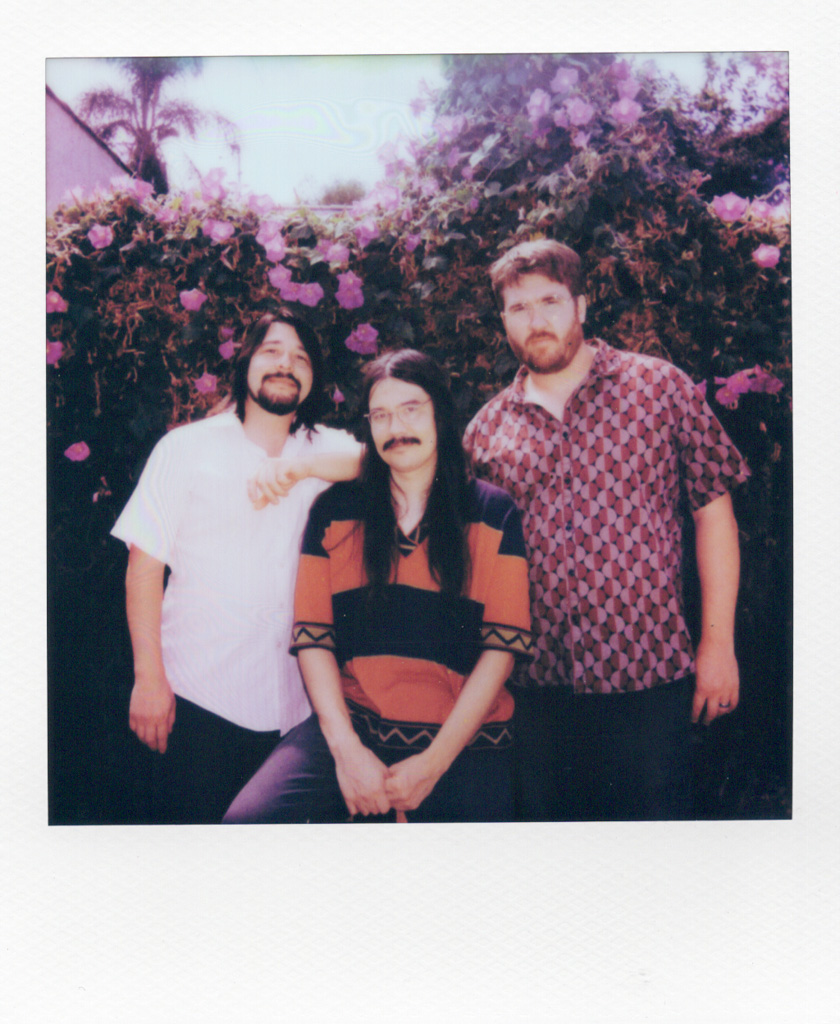
Brainstory
Before the accolades, the albums, the tours and the years spent sharpening their instincts in the studio, Brainstory were three musicians figuring things out in real time. Kevin Martin and his brother Tony grew up in the Inland Empire, where skateboarding and punk rock helped shape their understanding of music as something unruly, communal and self-directed. Eric Hagstrom eventually joined them through a shared love of jazz, and what began as a trio of musicians playing the language of improvisation slowly became something else: a band that could absorb the lessons of jazz without being beholden to its conventions.
That spirit of discovery runs through Shoebox Days, Brainstory’s new EP, a concise collection that doubles as a document of growth and a farewell to an important chapter in the band’s history. Much of the material dates back several years, with some recordings originating as early as 2020 or 2021. At the time, the songs were fragments — grooves, sketches, and ideas that seemed promising but couldn’t yet find their final form. Years later, with Brainstory more assured as musicians, producers and arrangers, they returned to those pieces and finished them.
The title comes from the band’s longtime Long Beach studio, affectionately known as the Shoebox. Though the room was small — almost comically so — it became a laboratory for the group’s imagination. Hagstrom initially acquired the space in 2016 as a place to practice drums. Over time, Brainstory transformed it into a working studio, filling its limited dimensions with instruments, recording equipment and the accumulated detritus of a band learning how to make records on its own terms. At maximum capacity, five people could barely move. Yet within that cramped studio, Brainstory found courage to expand.
By the time they completed Shoebox Days, the studio itself was disappearing from their lives. Shortly after the finished recordings were delivered to Big Crown Records, the band learned that it would have to vacate the spot. The timing was almost too perfect: they had completed one chapter just as circumstances forced them to begin another.
That sense of transition is embedded in the music. “The Watchers,” the EP’s opening track and forthcoming single, is rooted in an Inland Empire urban legend about mysterious figures who would chase cars through a cul-de-sac. Brainstory turns that childhood memory into something cinematic and strange: a spacious, hip-hop-inflected groove animated by trumpet, jazz harmony and psychedelic textures.
Brainstory emerged from jazz, but their music has always resisted the idea that jazz must announce itself through virtuosity. The band assembled around 2010 while studying at Riverside Community College. Kevin and Tony had already spent years playing music together, their sensibilities shaped by punk and skate culture before jazz entered their lives. Money Jungle became a formative record: to them, the 1962 meeting of Duke Ellington, Charles Mingus and Max Roach sounded like jazz with the same rebellious charge they had loved in punk. It showed them that improvisation could be confrontational, physical and free.
Eventually, they realized they didn’t have to choose between jazz and songwriting. They could take what jazz had taught them and apply it to their own compositions.
That idea has remained central to Brainstory’s evolution. Their early records were largely the work of a young band learning how to translate its live energy into recorded sound. But Shoebox Days represents a new level of independence. That confidence is audible on “Twin Kitchen,” a brief, beautifully tailored instrumental inspired by a favorite Inland Empire meal combining burgers, tacos and fries. Like the food that inspired it, the track merges seemingly disparate elements without making a spectacle of the collision. It arrives, establishes its mood, and disappears before overstaying its welcome.
Then there is “Home Alone,” a more overtly song-oriented detour born from the exhaustion of touring. After spending years on the road with little privacy — sleeping alongside bandmates, living out of suitcases and navigating the peculiar intimacy of being a working musician — Martin began to understand solitude differently. Alone time became precious. The song turns that realization into something playful, folky and psychedelic, with Martin playing saxophone on a recording for the first time almost as a joke before deciding the sound was too good to remove.
This willingness to follow an idea wherever it leads is perhaps Brainstory’s defining characteristic. Their guiding question seems to be: What happens if we take what we love and push it somewhere unfamiliar? That impulse is present in Shoebox Days, a record made from old fragments but completed with new ears. It is a testament to growth, but also to the strange beauty of looking backward only long enough to move forward. The Shoebox is gone now. The cramped space, the stacks of equipment, and the years of experimentation have become memories. Yet their sounds remain. Brainstory has left the room, but they took the music with them.
