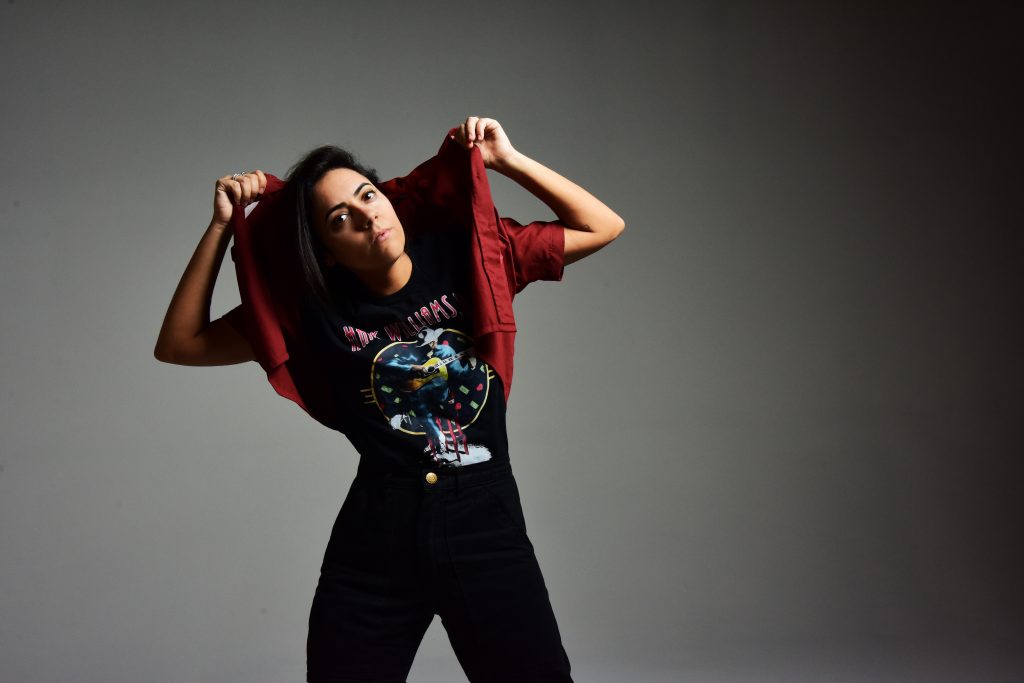


After years of uncertainty including label disputes, unpaid royalties and a surprise (and successful) album drop,And she is ready to make some noise. Her new album Let Me Do One More is three years in the making and Tudzin’s most defiant and accomplished record to date. Let Me Do One More is out now via Snack Shack Tracks (in partnership with Hopeless Records.)
After the success of her debut album, Kiss Yr Frenemies, and coining the term “tenderpunk,” illuminati hotties were on their way to recording and releasing a highly-anticipated sophomore album. However, things at the label started to fall apart, and illuminati hotties found themselves stuck in a contract with a label who didn’t have the infrastructure to put out the album the band had been crafting for months. “It felt like any momentum came to a screeching halt. It felt painful to pick up a guitar, to write, to record any loose ends that needed to happen to wrap up the album,” Sarah recalls.
With the emotional turmoil and uncertainty building over the label situation, Tudzin turned her focus to a new batch of songs that would become FREE I.H. Funneling all the raw feelings and letting go of any inhibitions, illuminati hotties released the collection of songs, carefully not defined as the “new album.” The critically-acclaimed, fan favorite, release closed the chapter on the label drama, and opened up the band musically to a whole world of possibilities.
The positive response to FREE I.H. brought back the energy and intention that had seeped out after the label fallout, and Sarah dove straight into the new album, Let Me Do One More. According to Sarah, “The songs tell a story of my gremlin-ass running around LA, sneaking into pools at night, messing up and starting over, begging for attention for one second longer, and asking the audience to let me do one more.”
With the album shaping up, Sarah knew that she didn’t want to sign a traditional label deal anymore. After all the work to get herself back creatively, she wanted to maintain as much autonomy and creative control as possible. She started an imprint label, Snack Shack Tracks, and partnered with Los Angeles-based, independent label, Hopeless Records. Together, they’ve released Let Me Do One More to even more critical-acclaim from The New York Times, Pitchfork, Billboard, Rolling Stone, and American Songwriter to name a few.
While FREE I.H. felt like an experimental conduit for self-expression at breakneck speed, Let Me Do One More is the fully-realized creative vision of two years of ambition, heartache, uncertainty, redemption, and ultimately triumph. Sarah reflects, “I love these songs and they’re a part of me and I’m proud of them.”
This IS the one you’ve been waiting for.
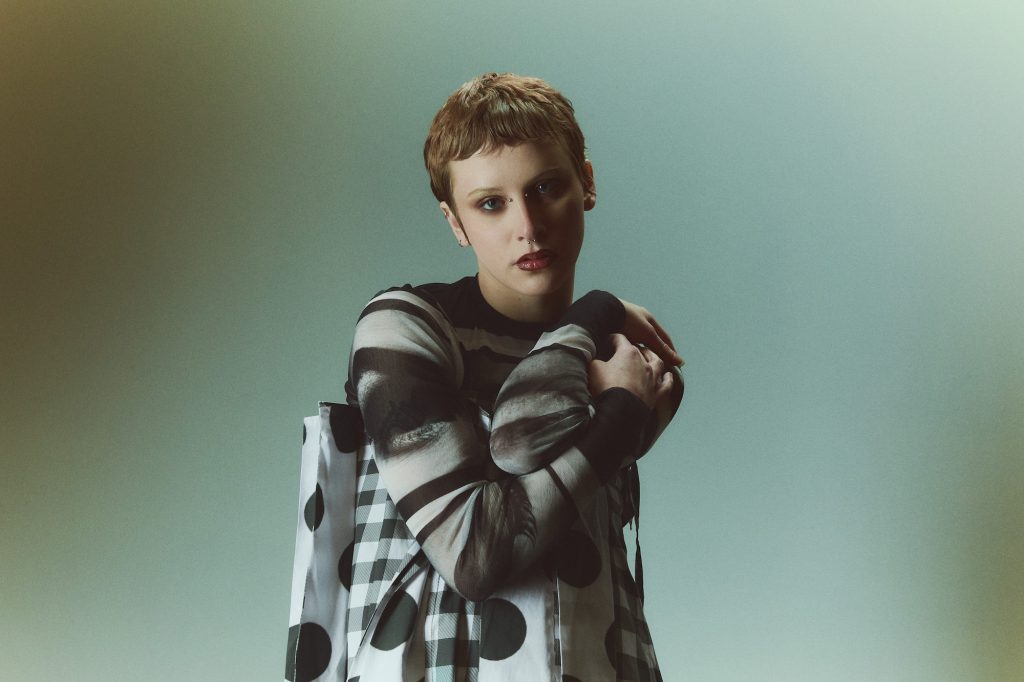
Daffo
An essential new voice on the indie-rock scene, 21-year-old singer/songwriter Daffo brings an
unexpected beauty to the most uncomfortable of feelings. With a poetic specificity that cuts right to
the heart, the Los Angeles-based artist speaks an unfiltered truth about all that sets them apart from
the wider world, confronting everything from shame and self-loathing to misplaced affection and
the chaos of living with an overactive brain. Originally from the Philadelphia suburbs, the musician
otherwise known as Gabi Gamberg started writing songs after taking up guitar at age nine, then later
shaped their sound by playing countless DIY shows in backyards and basements in New York City
and New Jersey. After spending much of the past year on tour with the likes of Sir Chloe and
illuminati hotties, Daffo now makes their full-length debut with Where the Earth Bends: a one-of-a-
kind coming-of-age album that finds powerful catharsis in painful confession.
Produced and mixed by Rob Schnapf (a veteran producer known for his work with Elliott Smith,
Beck, Cat Power, and more), Where the Earth Bends encompasses an intimate yet frenetic sound that
perfectly mirrors the album’s emotional intensity. In bringing the LP to life, Daffo worked in close
collaboration with Schnapf and engineer Matt Schuessler (Kurt Vile, Steve Gunn), enlisting
esteemed musicians like drummer Josh Adams (Devendra Banhart, Jon Batiste) and embracing a
boldly naturalistic approach to every element of the production process. Recorded at Schnapf’s
Mant Sounds Studio in L.A. and featuring Gamberg on guitar, violin, Mellotron, drums, and more,
Where the Earth Bends ultimately embodies an unfettered energy that exponentially magnifies the pure
impact of their songwriting. “Rob and Matt gave me the space to explore and really put my mark on
the songs, which helped me to believe in myself in a new way,” says Gamberg. “The whole
experience was so joyful for me, even though a lot of these songs are very sad.”
The latest entry in an acclaimed catalog including their widely beloved 2021 debut EP Crisis Kit and
its 2023 follow-up Pest, Where the Earth Bends begins on the oddly thrilling lament of “Get a Life”: a
sing-along-ready rumination on the all-too-familiar challenge of living fully in the moment. “I feel
like I spend a lot of time knowing I should be present, I should be enjoying the things in front of
me, but I can’t,” says Gamberg, who wrote “Get a Life” in the midst of a meditation retreat in
upstate New York. “It’s a lot of knowing what you should be doing, but not being able to do it.”
The first song recorded for Where the Earth Bends, “Get a Life” instantly set the tone for the spirit of
playful experimentation that soon infused all of the LP. “At some point I picked up some spoons
and used them as percussion, and we ended up keeping that on the track,” says Gamberg. “It was
my first time working with Rob and Matt and we had so much fun putting the song together—
nothing ever felt forced, which was true for the whole album.”
Deeply rooted in Daffo’s unsparing self-reflection, Where the Earth Bends sheds light on their struggle
with obsessive-compulsive disorder on songs like the distortion-drenched “Habit.” “I wrote that
song at a moment when I was having a hard time with my OCD and cyclical thinking,” says
Gamberg. “It’s partly about how I tend to come to conclusions about certain situations before even
allowing myself to experience them.” Meanwhile, “Quick Fix” examines how attempts at self-
soothing frequently lead to prolonged suffering. Detailing the empty pleasures of cigarette smoking
and one-night stands, the visceral yet ineffably gentle track serves as a sonic testament to Gamberg’s
inner battle to understand and forgive themselves. “The first verse, about eating junk and smoking, I
squeezed out during a very intense writer’s block,” Gamberg says. “On tour, I quit smoking for my
voice. When I came back from tour, I still couldn’t write until one day I started smoking again. That
day I was able to finish the song; my slight regression became fuel for the rest of the words.”
Written entirely by Gamberg, Where the Earth Bends inhabits a particularly raw emotionality on
“Dagger Song”—a hypnotically droney and mercurial track that explodes into an exhilarating
outburst at the bridge. “It’s about a person I had a very close relationship with who decided to not
be in my life anymore, and me trying to respect their desire for space while also grieving the loss of
that connection,” says Gamberg. Imbued with equal parts rage, shame, and resolve, the sublimely
grungy “Absence Makes the Heart Grow” documents the slow dissolution of a long-distance
relationship. “I wrote the song at the end of a relationship, and in my pain, I felt as though the cliché
about distance making the heart grow fonder was a sham,” says Gamberg. “It made everything
harder, the waves of emotion that accompanied reuniting and separating were too intense to
navigate. So, I decided to twist the saying into something that felt more real to me.” And on
“Sideways,” Daffo builds a gorgeous tension between the track’s tender sonic backdrop (delicate
piano, warm upright bass, softly sprawling acoustic guitar) and their heavy-hearted confession of a
possibly harmful tendency to hide their feelings from others (from the chorus: “I can’t say what I
mean/So I let it out sideways/And if I could say what I mean/I’d still let it out/Sideways”).
With their artist name taken from the swath of daffodils that grew in the yard of their childhood
home, Gamberg first tapped into their innate musicality by taking up violin age six, then underwent
classical training for nearly a decade before discovering their affinity for guitar. At the age of 15, they
took part in a summer program at Boston’s Berklee College of Music, where they crossed paths with
Hudson Pollock—a fellow student who soon introduced Gamberg to the DIY community in
northern New Jersey, including all-ages spaces like Serendipity Café (a student-run nonprofit venue
that’s hosted likeminded artists such as Pinegrove and Alex G). “I started going up to New Jersey
almost every weekend to record or play shows, and after a while I felt like I needed to get out my
town altogether,” Gamberg says. Following a failed attempt at persuading their parents to let them
drop out of high school, Gamberg enrolled at Idyllwild Arts Academy (a residential arts high school
in Southern California) just after Covid hit. “I spent a lot of my time secluded in the mountains,
writing and recording and going to classes on Zoom,” says Gamberg, who self-released Crisis Kit
during their time at Idyllwild. “At first I had a hard time with songwriting classes; I didn’t like the
idea of following any kind of formula or rules. But eventually I learned a lot about what makes a
song effective, and how to convey things in a way that really gets through to somebody.”
After graduating, Gamberg enrolled at the Clive Davis Institute of Recorded Music at New York
University and slowly made their way into the local DIY scene. “The first time I played in New
York, I didn’t know anyone and only one person showed up,” they say. “But then my first week of
classes I went in and told everyone, ‘I’m playing a show on Friday and I don’t have a band, who
wants to play with me?’ It’s a lot harder to tap into the DIY scene there, but pretty soon I was
playing shows every weekend in New York and in Jersey.” As their community of fans began to
grow, they downloaded TikTok on a whim and went viral with the second post they ever shared: a
bedroom performance of a spontaneously composed song called “The Experiment,” which later
appeared as a bonus track on Pest. Not long after Pest’s arrival, Daffo inked a deal with Concord
Records, then left NYU to focus on their music full-time.
Since signing with Concord (who spearheaded the first-time vinyl release of Crisis Kit and Pest),
Daffo has landed spots on lineups to major international festivals like The Great Escape, London
Calling, and Pitchfork Paris, in addition to touring as direct support for Annie DiRusso and
Blondshell. “It’s so crazy to travel to so many places and talk to all the people who’ve been listening
to my music,” Gamberg says. “Some people are really shy, some people give me art they’ve made,
some people tell me very personal stories about the way my songs have helped them. It’s always cool
to feel like the things I’ve gone through and written about weren’t all for nothing.” Looking back on
the making of Where the Earth Bends, Gamberg notes that the experience of songwriting remains
unaltered by the ever-growing reach of their artistry. “It’s amazing that people are able to connect
with my music, and it makes me feel a deeper connection to the world overall,” says Gamberg. “But
even though it gives me so much joy, I don’t think it’s really changed anything. At my core, I still
just write for myself and for my survival. I still just want to make things that feel good to me.”
