


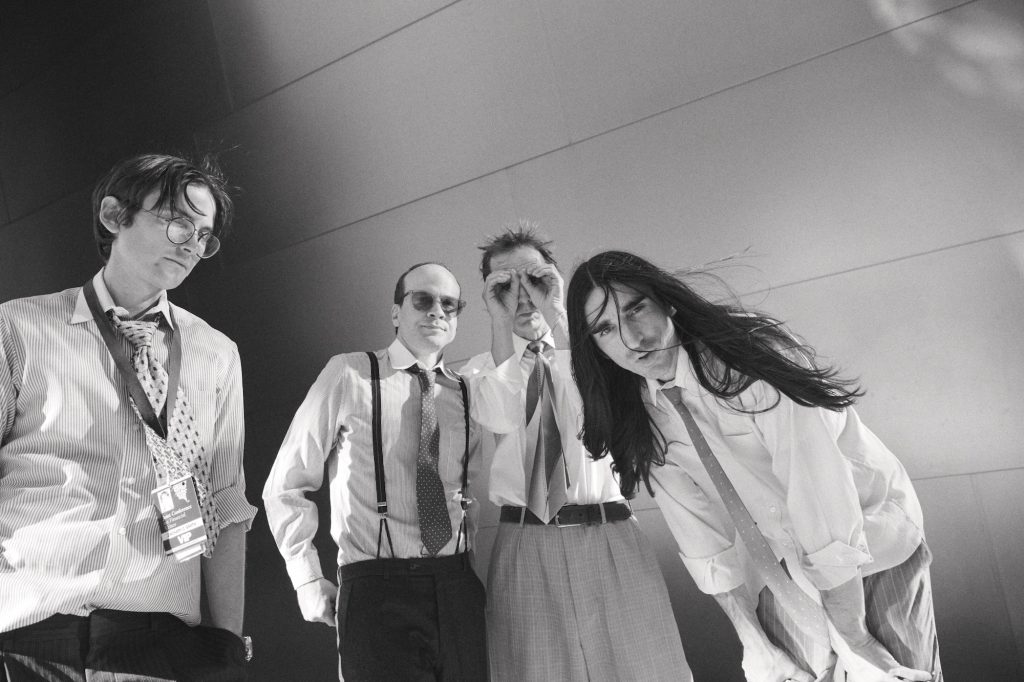


This is The New Alternative: a new genre for the 21st century. More specifically: a new genre for music’s optimized VC-funded super deluxe remixed AI-enhanced algorithmically perfected wild west 2020s, where a million streams is great, a billion even better, and a trillion well within reach. On their fifth album ZIRP!, DIIV emphatically and ecstatically embrace the underground pedigree and the pop instinct that have anchored the band like magnetic poles for the better part of their career—smashing them together in pursuit of a sound that pre-empts any notion that Zachary Cole Smith, Andrew Bailey, Colin Caulfield and Ben Newman have ever been playing between worlds. Put more simply, on ZIRP! DIIV answer the simple questions that so many bands can’t: What would it mean to grow up? And glow up, too?
For as long as they’ve been making music, DIIV have been victims of a world without the vocabulary to describe their willingness to braid the harshness of genres like shoegaze (on 2024’s Frog In Boiling Water) and grunge (2019’s Deceiver) with mellifluous and memorable pop melody. Over the years, the world has caught up with them, with artists like Slayyyter, Eartheater and Turnstile forcing old-guard gatekeepers to find new ways to describe this gleeful disregard for old-fashioned scene designations and genre tags. With ZIRP!—and their embrace of The New Alternative—DIIV lock in on a name for the universe they’ve been chasing for all these years, and a sound that represents the apotheosis of that universe.
Produced by British pop wizard A. G. Cook (Caroline Polachek, Charli XCX)—a chief architect of our current post-category future—ZIRP!, named for the zero interest rate policies that drew us into a world of failed startups and turned us all into atomised “users,” expands on the themes of Frog In Boiling Water with a newfound lightness. Here, Palantir, societal breakdown and streaming’s endless hamster wheel are all fodder for rich, sparkling pop songs: Album opener and lead single “The Fountain” pairs the sprawl and squall of DIIV records past with a jolting rhythmic guitar section that has arena-filling potential, while “Evangelizer” taps into the sweet-and-sour mainstream appeal of bands like Linkin Park and System Of A Down. Throughout, the band is zeroing in on its punchiest, most memorable melodies to date, each new internal hook and tossed-off earworm indicative of a band more than ready to make good on its ability to play in the mainstream.
When DIIV initially approached Cook, the producer says, “it was in the spirit of destroying & rebuilding their demos, Screamadelica-style, into a finished product, but that hybrid, half-remix approach felt completely wrong to me.” Instead, he became a professor of DIIV studies, attending the band’s shows and forming a unified theory of where the band needed to go next. “I became a bit obsessed with their live sound, and insisted on recording live drums before most of the songs were even finished. We spent a lot of time recording intricate guitar parts with specific guitar pedals, and as little time as possible doing anything on a computer, at least by my standards,” he says. “After a few rounds of that, ZIRP! emerged as a concept, and a sort of utopian, dystopian mantra. For me it became a vehicle to push the band into new territory.”
It’s thanks to Cook that DIIV were able to put together a song like “Trillions,” a lullaby-like pop-rock song that perfectly captures DIIV’s interest in exploring heavy themes through bright, accessible music. “Trillions,” with its unusually airy palette, was the band’s attempt at writing the kind of song that might appear in Spotify’s “Billions Club” playlist; it ended up becoming the album’s beating heart, a simple pop song that reclaims the silver-lined palette of the band’s 2012 debut Oshin and reclaims it as their own. Smith’s lyrics (“I’ll have a billion dollars saved/When I’m 24/I will have the fastest car/And a big old brain”) are quintessentially ZIRP!—disturbing and funny in equal measure, and easily accepted as both casually anthemic and laden with commentary. And then there’s “Kid,” a song that derives from the band’s challenge (to themselves) to write a perfect pop song, the DIIV way. “It started from an A. G. suggestion to try writing to a classic pop chord progression,” says Smith. “Which inspired us to pull out The KLF book The Manual, which positions pop as being kind of sinister, so starting from that point and working backwards to something very pure was really fun.”
ZIRP! ends with “Idiot In The Sky.” This is DIIV’s gorgeous, towering set-closer—the track where fans hold their torches up, voices in the crowd drown out the PA, and cold spark machines shower the stage with flickers of light. It was written long after the rest of ZIRP! after what Cook describes as “10 very intense days” toward the end of mixing sessions in Montana, and it captures, perfectly, DIIV as they are in this moment: The band you always knew becoming the alternative pop stars they always could be.

SASAMI
Blood On The Silver Screen
Out March 7, 2025
Two Sasami’s exist in harmony. First is Sasami Ashworth, the conservatory-trained classical French horn player, producer, and composer—an artist with a studious approach to craft. And then there is all-caps SASAMI, the fearless performer and protagonist of her three increasingly audacious albums. For Blood On the Silver Screen, these two sides fused for her most epic and realized music to date: the all-out Sasami pop record. “This album is all about learning and respecting the craft of pop songwriting, about relenting to illogical passion, obsession, and guiltless pleasure,” Sasami says. “It’s about leaning into the chaos of romance and sweeping devotion—romanticism to the point of self-destruction.”
After establishing herself with the poised melancholia of her eponymous 2019 debut, Sasami embraced volume and control on 2022’s Squeeze, but her goal on Blood On the Silver Screen was to speak her truth with conviction by singing. Working with producers Jenn Decilveo and Rostam, with Sasami as sole writer, each Blood On the Silver Screen track viscerally captures a different thread of love, sex, power, and embodiment. “Pop music is like fuel,” Sasami says. “It’s just invigorating.”
She came to that fact while training to tour Squeeze—shows that required her to run around with her Mockingbird guitar, mosh, leap off amps—at the gym. Sasami found herself fascinated by the high-octane music that sustains physical activity. “The gym became this place where I would exercise and be studying the music,” Sasami says. Eschewing today’s pop zeitgeist, Sasami gravitated towards late aughts and 2010s pop a la Britney Spears’ Femme Fatale and Lady Gaga’s Born This Way, plus Kelly Clarkson, Katy Perry, and Sia. She was influenced by modern country storytelling, mixing vulnerability with humor, and the mood board also included Prince, Japanese city pop, and the stadium-sized, denim-clad iconography of Bruce Springsteen.
“I wanted to go all out with this album,” Sasami sats. “I wanted to, in my tenderness and emotionality, have the bravery to undertake something as epic as making a pop record about love. I hope it makes people feel empowered and embodied, too. It’s important to not box yourself in.”
Blood On The Silver Screen Tracklisting
1. Slugger
2. Just Be Friends
3. I’ll Be Gone
4. Love Makes You Do Crazy Things
5. In Love With A Memory (featuring Clairo)
6. Possessed
7. Figure it Out
8. For The Weekend
9. Honeycrash
10. Hom Interlude
11. Nothing But A Sad Face
12. Lose It All
13. The Seed
Glixen
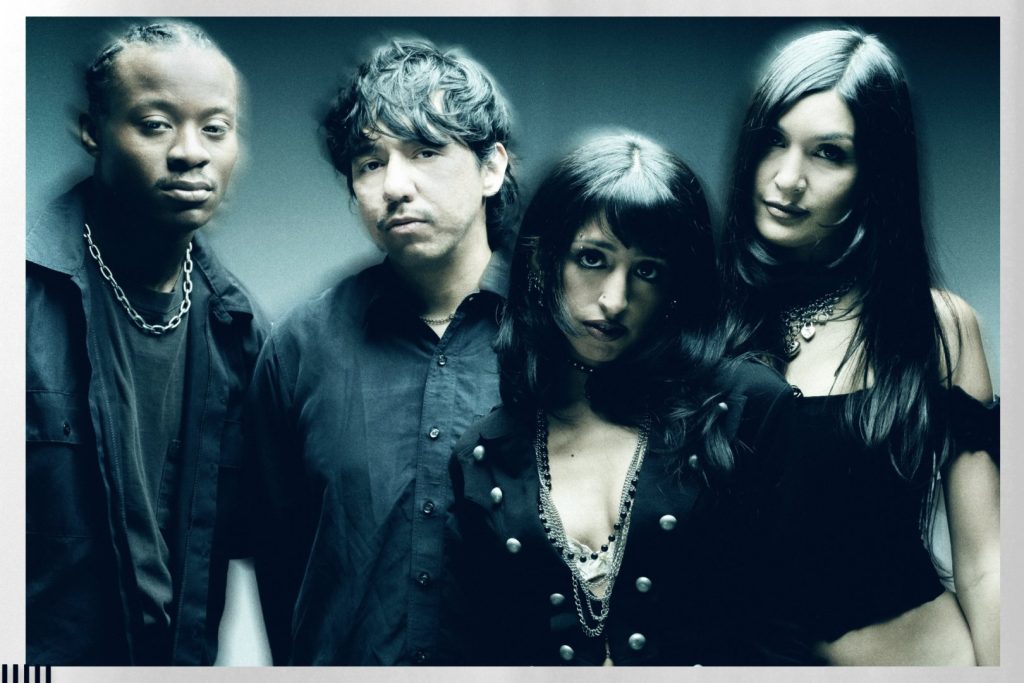
Glixen is a Phoenix-based shoegaze band formed in 2020, made up of vocalist/guitarist Aislinn Ritchie, guitarist Esteban Santana, bassist Sonia Garcia, and drummer Keire Johnson. Arriving as a standout force in the American shoegaze renaissance, Glixen blends heavy, textured soundscapes with dreamy, ethereal vocals—crafting music that nods to the genre’s roots while sounding distinctly modern.
Their sound draws from a wide range of influences, including My Bloody Valentine, Björk, t.A.T.u., Godflesh, and Hum, resulting in songs that balance intensity and introspection. Aislinn’s lulling vocal delivery floats over walls of distortion and reverb, creating a striking contrast that defines the band’s sonic identity.
In 2024, Glixen released their sophomore EP, quiet pleasures, produced by Sonny DiPerri (DIIV, My Bloody Valentine) and mastered by Dave Cooley (Paramore, Rancid). Recorded at Pale Moon Ranch in Juniper Hills, CA, the five-track release showcases their growth—melding syrupy melodies, heartfelt lyricism, and dense guitar work into a deeply emotional and immersive experience.
Glixen has toured with Interpol, DIIV, and Softcult, and made their Coachella debut in 2025, cementing their place at the forefront of the genre. Their name, taken from a lovesliescrushing song, speaks to their deep connection to shoegaze’s dreamy, otherworldly spirit—while forging a sound that is unmistakably their own.
