
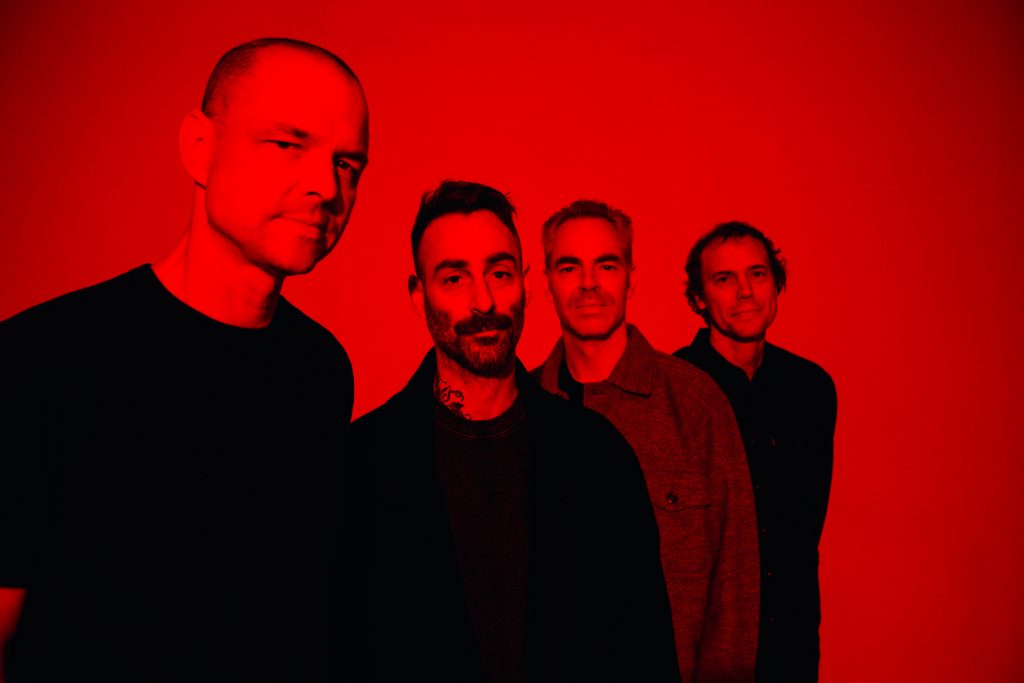


Before attaining global recognition as a defining pillar of the “Midwest Emo” sub-genre, American Football was a humble University of Illinois-based indie rock band led by Mike Kinsella (founding Cap’n Jazz drummer-turned- vocalist-and-guitarist) along with Steve Holmes (guitar) and Steve Lamos (drums /
trumpet). They were influenced at the time by artists including Steve Reich, Tortoise, and The Sea and Cake.
Together, American Football would play no more than a dozen sparsely attended shows before going their separate ways. With college graduation and some variation of adulthood looming, the band’s parting gift would be shared in the form of a self-titled album, released in September of 1999 via the locally founded Polyvinyl Record Co. What would transpire over the ensuing fifteen years, however, is something made of rock and roll legend – where word of mouth meets message boards, and mixtapes, burned CDs, and early file sharing platforms allowed for the lore of an otherwise unknown band, with a nondescript house on their lone album cover, to grow into something much larger.
In 2014, answering the call from a growing legion of dedicated fans, American Football would reunite to
international acclaim. With the addition of bassist/multi-instrumentalist and cousin Nate Kinsella, the
quartet has since released two additional (and equally beloved) self-titled records in 2016 and 2019, while
steering a natural evolution in their evergreen sound towards post-rock, post-punk, and more
experimental influences. They’ve collaborated with admired peers and fans alike, including Paramore’s
Hayley Williams, Slowdive’s Rachel Goswell, and Ethel Cain, among others. The band has been touted
among the most important artists of their class by the likes of Alternative Press, The FADER, GQ, The
Guardian, NME, NPR Music, KEXP, Vulture, Rolling Stone, and elsewhere.
Hailed as the “most influential album in the genre” by Pitchfork, American Football spent the last two
years honoring its 25th anniversary of their self-titled debut – colloquially known as “LP1,” by embarking
on a sold out world tour. In the process, they shared a remastered edition of the landmark record,
compiled an LP1 covers album by artists of mutual inspiration, put out their first live album, and released
a companion concert film of its recording.
Having recently ventured into parts of the globe for the first time, the band has also found an
overwhelming embrace among a new generation of fans. Many of these fans have never been to the
American Midwest, yet have all felt that same emotional connection to its vast geography and rich
creative soil. As spring approaches in 2026, so does new growth…
Mei Semones
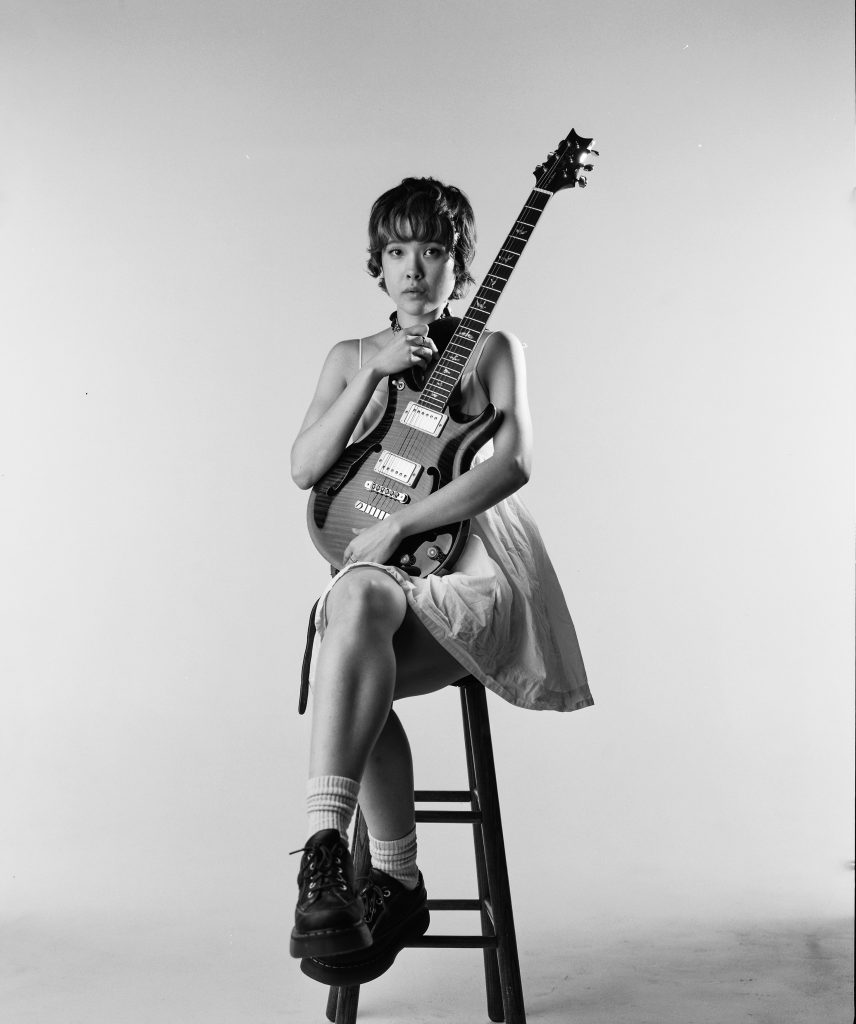
No second-guessing, no overthinking. The way I want to live my life is by doing the things that are important to me, and I think everyone should live that way,” says Mei Semones of her strengthened self-assurance. Through continuously honing in on her signature fusion of indie rock, bossa nova, jazz and chamber pop in a way that highlights her technical prowess on guitar, the 24-year-old Brooklyn-based songwriter and guitarist is quickly establishing herself as an innovative musical force. Since the release of her acclaimed 2024 Kabutomushi EP, a series of lushly orchestrated reflections on love in its many stages, Mei has gone on to tour extensively across the US, cultivate a dedicated following, and write and record her highly anticipated debut album, Animaru. Inspired by the Japanese pronunciation of the word “animal” in Japanese, Animaru is the embodiment of Mei’s deeper trust in her instincts – a collection of musically impressive tracks that see Mei sounding more adventurous, more vulnerable and more confident than ever before.
Mei’s newfound assertiveness comes in part from her experiences in the past year, as 2024 was a transformative year for the Mei Semones band. They shared bills with the likes of Liana Flores, Elephant Gym and Kara Jackson, among others, and Mei transitioned to doing music full-time. Amidst the frequent touring, Mei and her five-piece band recorded the album in the summer of 2024 at Ashlawn Recording Company, a farm studio in Connecticut operated by their friend Charles Dahlke. To these sessions, she brought a batch of tracks that, not unlike Kabutomushi, are sophisticated declarations of non-romantic love: love of life (“Dumb Feeling”), love of family (“Zarigani”), love of music and her guitar (“Tora Moyo”). Animaru exemplifies Mei’s enchantingly wide range as a songwriter and musician, including some of the most challenging and most straightforward songs Mei has ever written.
Though her music might inherently evoke feelings of romance and softness, the crux of the album lies in Mei and her band’s skillful balance of tension and release. Often within individual tracks, there will be moments of pared-back acoustic guitar adorned by Mei’s infectious vocalizations that, in a moment’s notice, transform into orchestral swells of sweeping strings and complex guitar rhythms. Album opener “Dumb Feeling” is a prime example, a bossa/samba blend complete with indie rock sensibilities in the choruses as Mei details her contentment with her life in New York City. Mei actively seeks out musical challenges throughout Animaru, like on “I can do what I want,” the album’s most technically ambitious track. But she still manages to make the quickly cascading guitar harmonics and odd meters sound like a breeze to play, her breathy, lilting voice cutting through the track’s energetic dynamics. It epitomizes the album as a whole – she sings of doing things her own way, on her own terms, in hopes of inspiring others to make the same active switch in their own lives.
The simpler moments on Animaru are equally as captivating as when Mei is shredding on guitar or her bandmates are carrying out an intricate arrangement. “Donguri,” a stripped-down jazz duo performance between acoustic guitar and upright bass, is the simplest song Mei has ever written, brought to life by Mei sweetly chronicling (mostly in Japanese) what she imagines life would be like as a woodland creature living in the forest. The album’s penultimate track also encompasses themes relating to the titular “animaru.” Translating to “crayfish,” the bright, effervescent “Zarigani” is a nostalgic expression of love for her twin sister, with Mei singing “We’ll always have each other / I love you like my guitar / I love you like no other.” Family is one of the primary loves of Mei’s life, with her mom, Seiko Semones, making all of her album and single artwork. Despite Animaru being a statement of Mei’s autonomy and confidence at this
point in her life, it’s the various loves that she surrounds herself with – her family, her friends, her band, her music – that empower her to do things her own way.
Animaru, the debut album by Mei Semones, is out on May 2, 2025, on Bayonet Records.
