
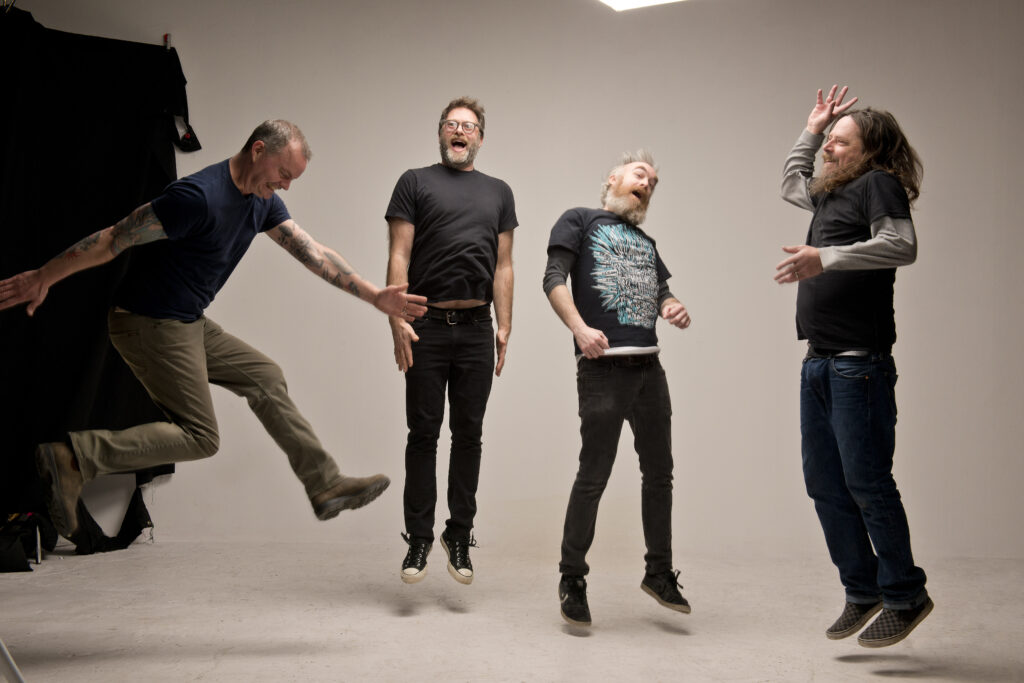


“I like the idea of the record starting in a way that doesn’t make any sense at all for a
Red Fang record.”
That’s vocalist/bassist Aaron Beam talking about “Take It Back,” the opening
track—or “sintro,” part song, part intro—of Red Fang’s fifth album, Arrows.
“It reminds me of a time before people listened to music digitally—and they listened
to full albums,” drummer John Sherman adds. “There were often cool, spooky
intros—like fuckin’ Dio albums and shit. There are some weird sounds at the
beginning to get you in the mood before it blasts off.”
And blast off it does. After the woozy opening salvo of “Take It Back,” Arrows
launches into a super-rock trifecta of what Red Fang does best—from Melvins-esque
power dirge “Unreal Estate” into the anthemic title track into up-tempo banger “My
Disaster.”
Yeah, it’s been nearly five years since 2016’s Only Ghosts, but your favorite
beer-crushing, zombie-killing, air-guitar-contest-judging metal heroes are back in
action, doing what they do best—AND MORE. “This record feels more like Murder
The Mountains to me than any record we’ve done before or since,” Beam ventures. “It
doesn’t sound like that record, but Murder The Mountains was us doing whatever the
fuck we wanted, and that’s what this is, too.”
“We’re definitely exploring new territory,” says guitarist/vocalist Bryan Giles. “And
I’m very happy about that. I wouldn’t wanna be in this band if we kept doing the
same thing over and over again.”
Arrows was recorded at Halfling Studios in the band’s hometown of Portland, OR,
with longtime collaborator Chris Funk, who produced Murder The Mountains and
2013’s Whales and Leeches. “Chris is a major influencer as far as the weird ambient
stuff in between the songs and the creepy incidental noises within the songs,” Giles
points out. “I think he definitely creates an added layer of atmosphere that we
wouldn’t have otherwise.”
In an effort to compound said atmosphere, Sherman recorded some of his drum
parts at the bottom of a pool. Luckily, it was empty. “It’s actually a kick-ass skate
pool,” the drummer explains. “It was designed by Lance Mountain, if I’ve got my facts
straight. As soon as we decided to record there, I knew I would end up in the pool at
some point.”
“The pool was a big part of the record,” Giles confirms. “The drums sound so
huge—it’s crazy. But I was terrified of the pool because there was no railing. Every
time I walked by, I was afraid of falling into it. So it was a love/hate relationship with
the pool for me.”
The title Arrows was chosen through Red Fang’s patented and labor-intensive
selection process. “Of all the titles that got thrown around, that was the one
everyone hated the least,” Sherman explains. “Which is the case with every record,
pretty much.”
“It’s actually the same way we decided on the band name,” Beam chimes in. “It was
the only one where someone wasn’t like, ‘NO!’”
Arrows has the added bonus of a proper title track, which is new territory for the
dudes. “This is the first time we’ve named an album after a song that’s actually on
the album,” Beam explains. “We have other albums that are named after songs of
ours that are not on those albums. So this time we’re really fucking with you because
we didn’t fuck with you.”
It just so happens that the title track is also the lead single for the album—the
general public’s first taste of fresh Fang. “There’s some songs that are pretty clearly
Red Fang on this album, and others that maybe go a little further outside of what
we’ve normally done,” Beam explains. “‘Prehistoric Dog’ was clearly the song to pick
for the first single from the first record. ‘Wires’ was clearly the song to pick from the
second record. I’m not sure there was a clear frontrunner on this album, which could
be taken to mean that either all of the songs are kind of mediocre at best or there are
quite a few that could qualify as the lead single. So it came down to the ones that the
dudes who are making the videos liked best.”
Which brings us to director Rob McConnaughy, who created the pants-pissing clips
for “Prehistoric Dog,” “Wires” and many other Red Fang hits. “His way of presenting
us really works,” guitarist David Sullivan says. “That first video he did for us for
‘Prehistoric Dog’ gave us a big jumpstart as far as the band getting popular. And we
love working with him.”
Over the years, McConnaughy has helped showcase an aspect of Red Fang that most
metal and hard rock bands shy away from: Humor. “It suits our personalities,” Giles
points out. “I mean, I don’t wanna fight people, you know? If I look like I’m flexing,
they’ll be like, ‘Oh, I can take him.’ But if we’re making a joke, maybe someone will
wanna tell me a joke—or buy me a beer.”
“If you were to have dinner with the band, it would be closer to one of our videos
than, like, us walking in slow-mo through the fog with a goat’s head,” he adds. “I
mean, no one’s gonna believe that shit.”
Similarly, fans might not believe what the song “Arrows” is partially about. “If you’re
confused by some of the lyrics to that song, that makes sense,” Beam explains. “But
it makes reference to meditation. I started meditating six years ago, but I can only do
it when I’m not feeling too anxious. So, when I don’t need it, that’s when I can do it.”
Elsewhere, “Fonzi Scheme” was named after legendary Happy Days cool guy Arthur
Fonzarelli—if only because it’s in the key of his famous catchphrase, “Aaay.” Producer
Chris Funk came up with the idea of bringing in string players from the Portland
Cello Project to class up the track. “I would say laziness drove that decision,” Beam
deadpans. “We didn’t want to come up with any guitar melodies, so we hired
someone else to do it for us.”
Meanwhile, the opening riff of closer “Funeral Coach” was written 12 years ago. But
it took until recently for the song to blossom into its full double-entendre glory. “I
was driving around and I saw a hearse that said ‘funeral coach services’ on the back,”
Beam explains. “So the first thing that popped into my head was a dude with a
headset and a clipboard going, ‘Alright, dudes—more tears! Five minutes in is when
the tears are critical, or no one’s gonna believe that anyone cares that this person
died.’”
In a nod to tradition, Arrows will be available in formats that include all the drums,
bass, guitars and vocals. But it could’ve gone another way. “Our original idea was to
release the album with no vocals or guitar solos,” Beam explains. “If you want the
guitar solos, it’s an extra five bucks. If you want the vocals, it’s an extra ten bucks. So
basically people should feel lucky that we didn’t do that. You get to buy the whole
thing all together.”
Red Fang think of it as a generous display of gratitude toward their fans. “Yeah,” says
Sherman, “Thank you for buying our album, you lucky bastards.”
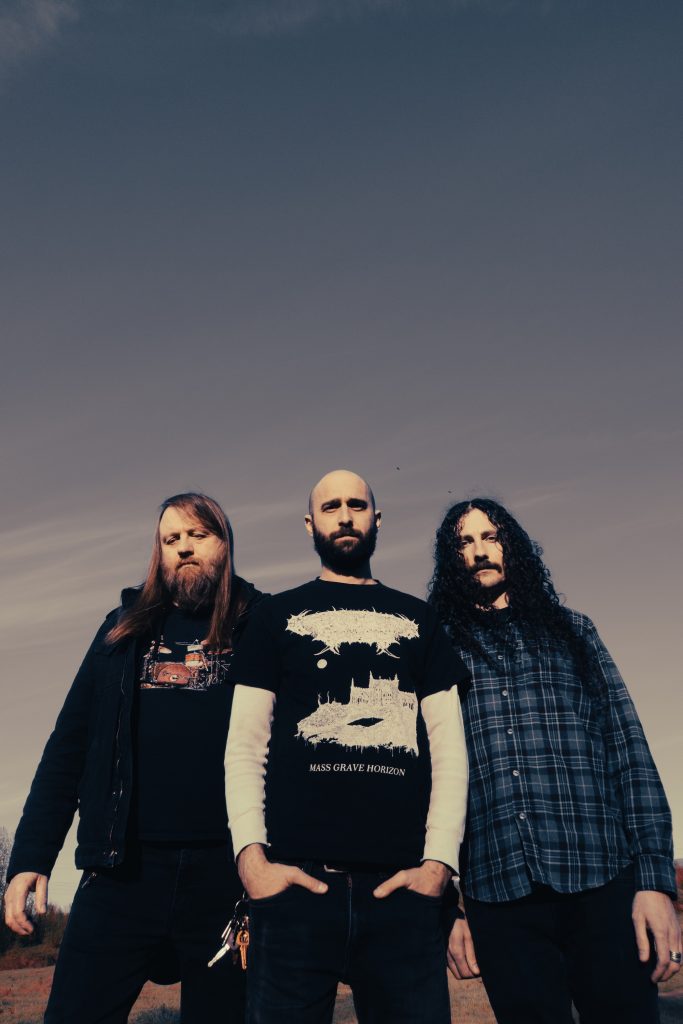
Stygian Bough – A Bell Witch and Aerial Ruin Collaboration
In our human minds, according to the Law of Contagious Magic as described in The Golden Bough by anthropologist James Frazer, contact between two objects creates an inseparable thread between them. A gift from a dead friend forever holds this magic like a scar reflecting a wound. Similarly, a piece of food that touches the floor is suddenly abject and rotten. Pairing this notion with the Law of Similarity Magic, as described by Frazer, where an object resembling another can share its power, a musical notion can be understood to serve as an unbodied conduit of such magics; an emotional contact between the music and audience wherein such sorcery threads an inseparable seam that, for a time, resemble each other.
Aptly named in reference to the aforementioned book, on Stygian Bough Volume II, the collaboration between Bell Witch (Dylan Desmond, Jesse Shreibman) and Aerial Ruin (Erik Moggridge) enlivens its unbodied presence resembling both collaborating projects as a conduit in its own separate entity. In the course of an hour, four musical pieces set themselves apart from the catalogs of both individual bands and branch into new territory all the while threaded to
the original encounter.
Over the album a cyclical world unfolds in which different perspectives of how various forms of worship empower, eclipse, destroy and feed on each other is explored. “All four songs explore different aspects of worship or awe—transcendent experiences in different contexts,” vocalist & guitarist Erik Moggridge says.
“Waves Became The Sky,” the opening track on Volume II, recalls “Rows (of Endless Waves)” from Bell Witch’s debut album Longing. It was here that Bell Witch and Aerial Ruin had initial contact. The song expands on the 2012 original’s theme pondering, as Moggridge says, “the battle of scientific thinking compared to superstitious thinking.” And it wastes no time in its approach; sonic waves form an immediate pulse well known to anyone familiar with Bell Witch and Stygian Bough Volume I. The immediacy of Moggridge’s guitar and vocal choruses add layer upon layer of harmonic depth with polyrhythmic melodies as they soar with Desmond’s two handed method of bass guitar.
“King of the Wood,” quickly lurks into an abyss death-doom fans of Thergothon and My Dying Bride will find familiarity in. On the track, Moggridge says it is “about rapture and confusion that come from calculating scale, from the very small to the very large.” Shreibman’s drum passages mirror the fluidity of the melodic instruments. But before an emotional pinnacle can be reached the track slips into a swirling galaxy resembling the expansiveness of Tangerine Dream echoing from far inside the black hole at its center. Soon Moggridge’s vocals return with a haunting passage that Shreibman’s drums soon interrupt with the immediacy of a nuclear bomb. Track three, “From Dominion,” opens to the power trio resembling the elements of Aerial Ruin’s dark folk temperaments. With a voice one can imagine emerging from some forgotten dimension
in ancient Albion, Moggridge pulls thread as much enchantment as song. Soon enough the brooding acoustics transform into soaring melodies with the dueling harmonic magic of a Thin Lizzy guitar solo riding the rhythmic pounding of Shreibman’s drums. At its most tangible moments, the song could almost be said to have been constructed with the repeating verses and choruses common in folk music.
Moggridge states that “Told and Leadened,” the album’s closer and longest track clocking in at just over nineteen minutes, “is about the cycles of power and how they eclipse and prop each other up.” The song starts like a tide slowly returning after its preceding wave. Bass feedback and a repetitious guitar rhythm foreshadow Shreibman’s drums once again exploding in an urgency like that of early doom classicists Candlemass. The waves continue throughout, recalling the rising and falling intensities in the song structures established on 2020’s Volume I, which Blabbermouth declared “Contender for doom metal album of the year.” In a harmonic break in the composition, Shreibman embarks on a drum passage reminding one of the outro to Neurosis’ Enemy of the Sun. Coincidentally, the album was also recorded by Billy Anderson in
Portland.
Anderson has worked on 3 prior Bell Witch recordings (Four Phantoms, Mirror Reaper, Clandestine Gate). “There’s a creative camaraderie that we have with him,” Desmond says. “He knows where we’re coming from. He’s worked with us on numerous other projects, but his outsider’s perspective is particularly valuable, like a filter system that helps me see it objectively, rather than subjectively.”
The separation of tracks, uncommon in Bell Witch’s modern era, remains compositionally fluid between each piece. “This is as close to traditional songwriting as any of us have done together” says Shreibman. “We gave special attention to a lot of polyphonic passages,” Desmond adds, “which is a rarity in past (Bell Witch) records due to limitations of instrumentation, a two piece band can only play so many instruments at once. This applies even more so to the solo act of Aerial Ruin.”
The result is a commanding four songs steeped in mysticism, legend, and the examination of “the connective threads that shape and influence the culture, mythology, and customs of all human societies throughout time in unique, localized ways as referenced in the Golden Bough,” says Desmond.
The cover features a stunning painting by acclaimed artist Denis Forkas (Behemoth, Wolves in the Throne Room). The piece encapsulates the focused attention and emotional heft of Stygian Bough Volume II.
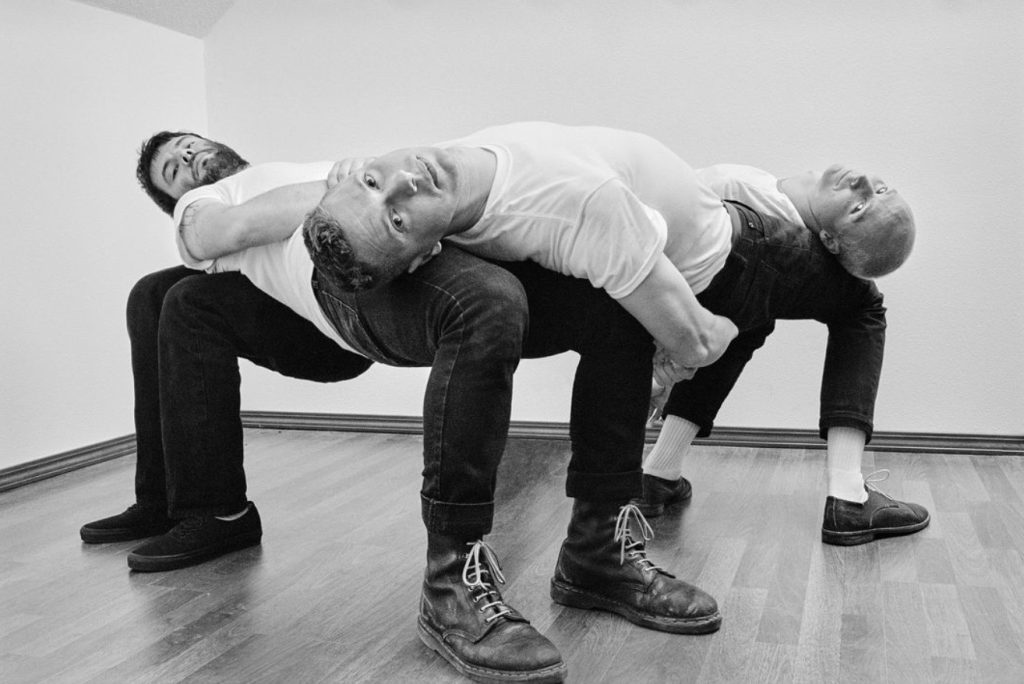
HELP
Help is the frenzied sound of a broken and collapsing society.
In a world beset with anti-human reactions to daily struggles, Help responds with ways to dismantle evil machines and systems: Remove fear from decision making. Act in defiant joy. Refuse to dominate others. Do not hoard the gifts of the universe. The future is uncertain. Ends don’t justify means. Solidarity now. “If Ram Dass says: Be Here Now, I say Class War Now,” says drummer Bim Ditson, “Because ‘here’ is becoming more and more unlivable with every millionaire, much less billionaire.“
“Meditation is cool though, actually.” He adds.
It is this pro-human mindset that brought Help band-mates Ryan Neighbors (Guitar/vocals), Boone Howard (bass vocals), and Bim Ditson (drums) together. All three had spent the last decade or so in other, perhaps more restrained, bands. Ditson with grinding indie rockers And And And, Neighbors with alt-pop dynamos Portugal. The Man and with his electronic project Hustle and Drone, Boone Howard with his band of the same name and the psych-leaning The We Shared Milk. With Help, they are retrieving punk roots each member had put down in their teens. They are ripping the seams back open to see what’s really inside. “Everyone is angry,” says Neighbors, “Make some art about it.”
So they did. The trio holed up for two blood-soaked days at The Map Room studio in their hometown of Portland, OR with producer Sonny DiPerri (Portugal. The Man, Animal Collective, Protomartyr, Emma Ruth Rundle) whose unblinking production captures the band’s urgency without taming their ferocity. The resulting EP is a mere six songs but each one cuts like a power-saw with the safety off. Bruised and gnarled there’s an unfiltered sense of humanity, pain, solidarity, and even optimism. This is the plain justice of anarchy.
The recordings come with a layer of sweat and volume that hammers the point deeper, and there’s a bent-nail feeling that’s just as good onstage. “Playing live in this band is a revelation…” Howard says, “[I’m] used to fronting bands of my own, I’m learning how rewarding it is to sit back and complement these other guys whether accenting the kick and snare while locking in with Bim or just solidifying the melodic structure of the songs through Ryan’s completely unhinged guitar playing.”
Help refuses to bow to a world where the counterculture has been nullified by corporatism and surveillance capitalism. “Now is the time for a sound saying: ‘Fuck this shit!’” Neighbors insists, “When The Donald became POTUS I heard a few people say; at least we will get some good punk rock records coming out. Well, I haven’t heard one yet, so here is ours.”
Help is the band Portland needs right now. Fuck it, it’s the band the whole world could use a heavy dose of if we want to climb out of the dark ages of greed and into the next century of mutual aid and collaborative self-directed communities of creativity.
