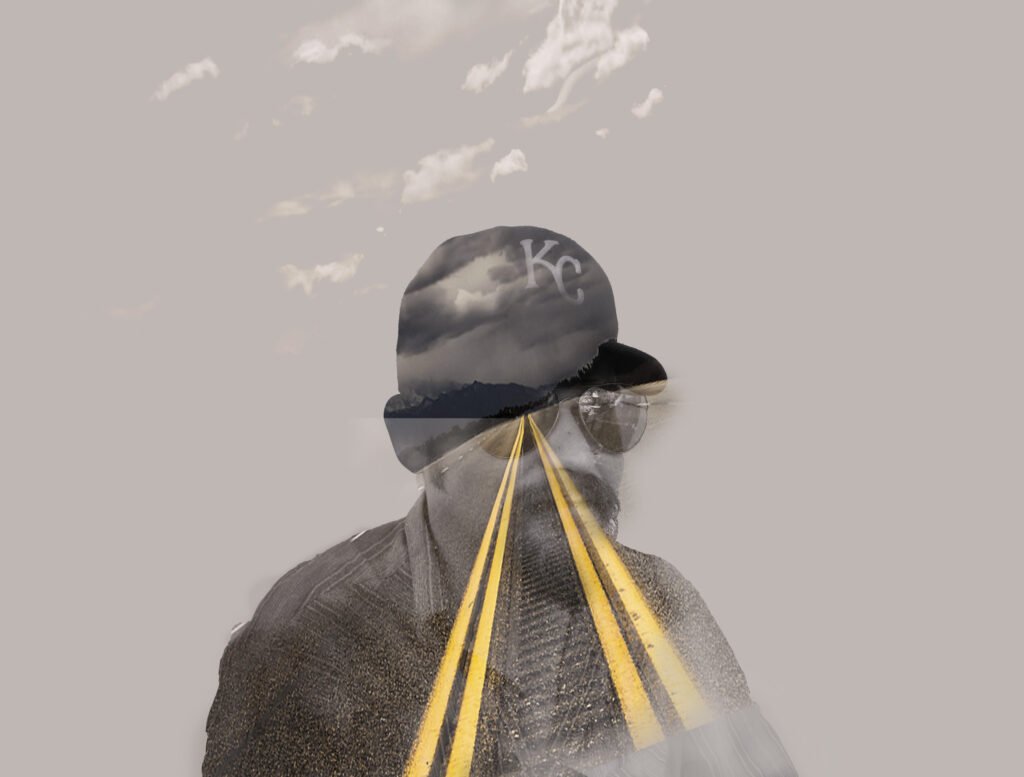


You may know Riley Downing from his work with acclaimed New Orleans combo the Deslondes, or perhaps from his similarly rootsy and wide-ranging catalog of songs with the Tumbleweeds – indeed, the Missouri-based singer-songwriter’s ability to set gripping, evocative narratives within soundscapes that weave together country, blues, folk, r&b, bluegrass, rock, soul and whatever else catches his ear is something that, once you hear it, is hard to shake free from. Same goes for that voice – deep, dusty and drawling, it’s an instrument that can stop you in your tracks with its character and expressiveness, as well as through Downing’s knack for laying out complex emotions in plainspoken, direct language.
For Downing, it all stems from an organic and intuitive approach to songwriting and playing. “I just try to write and sing about life as I live it,” he says simply. All those little bits of life are on full display on Start It Over, his first-ever solo album. From the protagonist in the opening country-soul jam “I’m Not Ready” (“Everybody’s rushin’ / I’m movin’ at my own speed”), to the cratedigger in the breezy “Start It Over” who seems as enamored of his old records as he is with his girl (“She was a 45 woman and I’m a 45 man”) to the overworked nine-to-five-er caught in a cycle of long days at work, late nights at home, followed by hungover mornings (“Long line of trouble / Troubles old and new / Once I was happy / But those days are through”) in the psych-folk lament “Crazy,” the 12 tracks collected on Start It Over unravel in a way that feels instantly relatable, as if Downing could be talking about you, me, or any one of us and doing it with the ease and empathy of a man who’s clearly been there, done that, and lived to play another day.
Following his last record with the Deslondes, Downing returned home to Missouri, helping out his brother with his plumbing business, embarking on some short solo runs and otherwise playing “mostly for old friends and old dogs and whatever other critters were within earshot,” he says. At some point, Downing and his Deslondes band mate, John James Tourville decided it might be fun to collaborate and release a 45 rpm single.
And so Downing and John James (that’s JJ to you) began a long-distance collaboration, adding longtime Deslondes producer Andrija Tokic (that’s Dre to you) into the musical chain as well. The three hashed out songwriting, arrangement and production ideas by passing demos back and forth from their respective homes – Downing in Missouri, JJ in North Carolina and Dre in Nashville – during the months of lockdown. As far as approach, everything was on the table. Downing recalls one of his demos being met with the suggestion that it needed a “Lou Reed/Fats Domino sound.” He laughs. “I couldn’t even imagine what that sounded like, but I had fun trying my best to imagine it.”
By the time the three met up, at Dre’s Bomb Shelter Studios in Nashville, everyone had been quarantined at home for two months, with nary a gig or jam session to be had. What they did have, however, was songs. And also, courtesy of Dre, a crack team of musicians. Who was along for the ride? Meg Coleman (Yola) and Jimmy Lester (Los Straightjackets, Blaze Foley) on drums, Dennis Crouch (Johnny Cash, Dolly Parton, co-founder of The Time Jumpers with Vince Gill) on upright bass, Jack Lawrence (The Raconteurs) on electric bass, Jeff Taylor (George Strait, Elvis Costello, The Time Jumpers) on keys, Peter Keys (P-Funk, Lynyrd Skynyrd) on Mellotron, Billy Contreras (George Jones) on strings, Derry DeBorja (John Prine, Jason Isbell and the 400 Unit) on Farfisa, and a host of backup singers, including Kyshona Armstrong, Maureen Murphy, Nickie Conley, Eric Brown and Vaughn Walters.
“The musicians that Dre picked out were just phenomenal,” Downing says. “They have endless amazing credits, they’ve all done great things and they were 110% in it.” So much so, he continues that “some of these songs on the record were first takes. And if they weren’t, then it was maybe take two or three.”
That first batch of tunes – five recorded in three days – included “I’m Not Ready” and “Start It Over,” as well as the strutting “Deep Breath,” the road-dog anthem “Never Coming Home,” and “Hey! Mister.” From there, the floodgates opened.
The trio continued to work together closely (but once again, from afar – there was a pandemic going on, after all) staying in constant communication to craft the next set of tunes, with Downing handling the writing and JJ and Dre working unwaveringly to bring his songs to life within vibrant and unique soundscapes. Over the summer, an impromptu road trip between JJ and Dre to transport a Hammond organ and speaker cabinet from Denver to the Bomb Shelter allowed the two to spend some additional time together doing pre-production, and they even made a quick stop in Missouri on the way back to Nashville for a quick check-in with Downing.
A month later, the three reconvened at the Bomb Shelter – this time for a relatively extravagant six days – to lay down the seven remaining songs. “I’ve known and worked with both of these guys for more than 10 years and have also lived with each at one point or another,” Downing explains of his connection with JJ and Dre. “We’re all old friends, so it was easy to get along and keep moving forward.”
Once again, the trio, along with the stellar backing musicians, captured inspiration in the moment, with JJ and Dre embellishing the tracks with all manner of instrumentation, from pedal steel, mandolin and fiddle to Mellotron, Farfisa and even guzheng (that’s traditional Chinese zither to you).
The end result reflects the mingling of past and present, traditional and unusual, that has long characterized Downing’s musical makeup. “I might be old-fashioned, but I’m not old-timey enough to not live in the modern world,” he says. Regarding his influences, Downing continues, “It’s a little bit of everything – I could probably make a long list and it’d be all over the place. I grew up going to country shows with my grandparents, but I was also angsty and played punk rock in high school. And then at the same time, I was getting into old folk and blues and stuff like that. So I never think in terms of a song having to be in ‘this’ genre or ‘that’ genre – I’m open to doing anything. I just enjoy writing and playing music.”
That joy comes through loud and clear on Start It Over, which, even in its most serious and somber moments – and also given the fact that it was recorded during a pandemic – radiates with a sincere appreciation for life and living in the here and now. As Downing puts it in “Deep Breath”: “Try to get your head screwed back on tight / Take a deep breath – it’s gonna be all right.”
This attitude, Downing says, was intentional. “There was so much going on in the world socially, politically and health-wise while we were making this record that I didn’t really know what kind of music people would even want to hear. But I knew I didn’t want to write a bunch of sad songs where you just stare at the fire and feel bad for yourself. I wanted the record to be about looking at things up on the upside – you know, ‘take a deep breath and we’ll all get through this.’ ”
As for Downing, while he may be through the recording of his first solo album, he assures that it’s certainly not his last. “I’m just going to keep working like I’ve been doing and communicating with Dre and JJ,” he says.
There’s a plan to get started on a new Deslondes record, “and hopefully by the time that’s done,” he says, “I’ll have another solo album ready to go as well.”
Bart Budwig
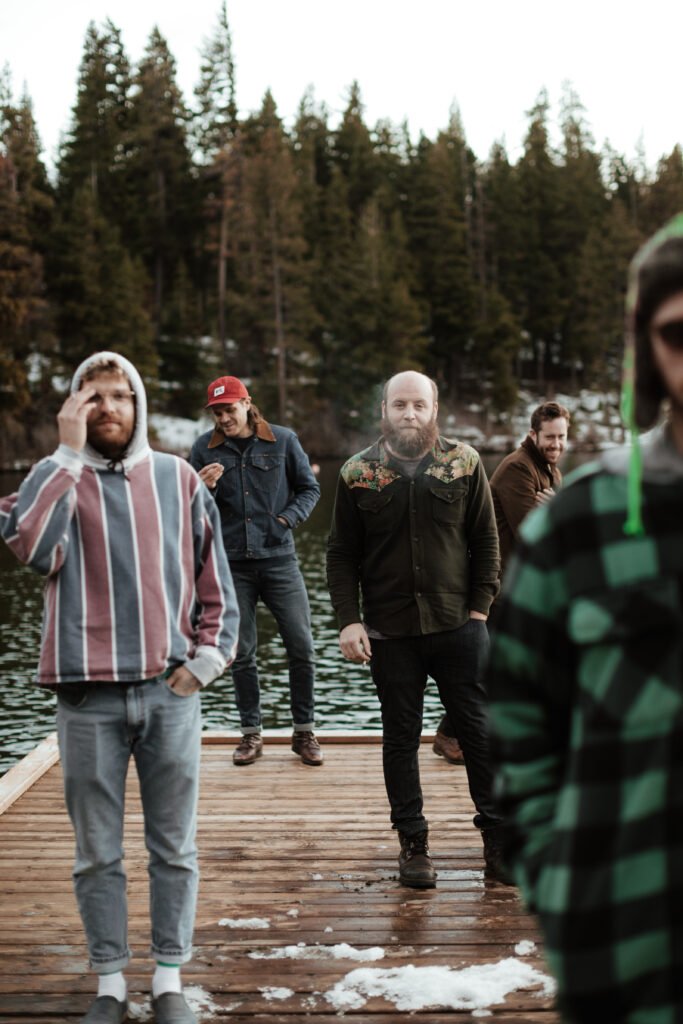
Bart Budwig is a prolific songwriter and renown audio producer/engineer from Enterprise, OR. “He sounds like John Prine, plays like Hoyt Axton, and looks like, well..Bart Budwig. He’s a cosmic country lawn gnome. He’s cherubic, cheery, and an old soul. Songs spring from the dreams of his noonday naps, and punch the keys of his typewriter above the OK Theater in Enterprise, Oregon.” – Sean Jewell, American Standard Time (2018)
Mr. Budwig has performed alongside or in support of artists such as Mason Jennings, Justin Townes Earle, John Craigie, California Honeydrops, Damien Jurado, The Infamous Stringdusters, and Fruition among others, and has produced or engineered records for Gregory Alan Isakov, Joseph, Horse Feathers, Blind Pilot, and the Shook Twins.
Kassi Valazza
Kassi Valazza
From Newman Street
May 2nd, 2025 via Fluff & Gravy Records
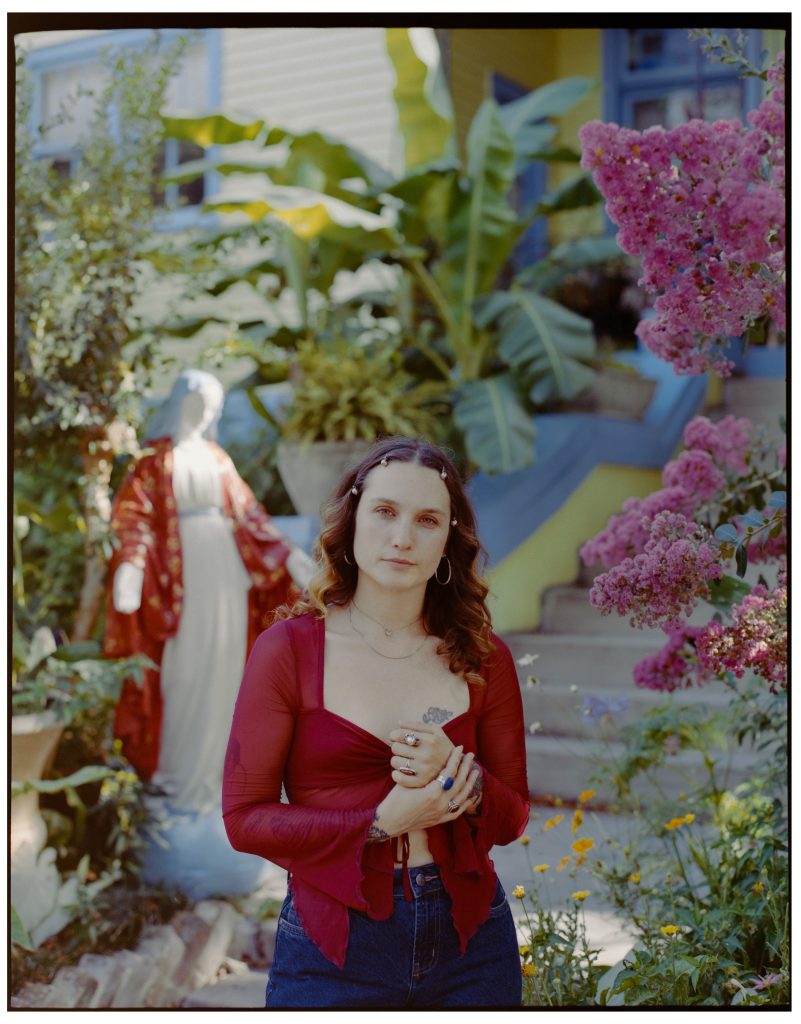
“Sometimes it takes four or five tries to realize something just isn’t working,” says Kassi Valazza. “I wrote this after my thirteenth try.” She’s referring to the song “Roll On” specifically, but the stagnating pull of repeating patterns—and the brutalizing work of breaking them—inform every song on her new album From Newman Street. “In songwriting and in life, you can’t keep expecting the same thing to work every time.”
Valazza grew up between Prescott and Phoenix, Arizona. She penned her first song at age ten but in those early efforts to perform, found herself halted by stage fright of a clinical level. “I’ve gone to therapy for it,” she says, half-laughing. She didn’t stop writing music but she let less paralyzing means of expression lead the way, eventually enrolling in arts school for painting, an illustrative instinct that inevitably reveals itself in her vivid songwriting. It wasn’t until she relocated to the Pacific Northwest as an adult that Valazza picked back up the proverbial—and actual—guitar.
“Zach Bryson was kind of like the honky tonk ambassador of Portland when I got there,” Valazza says. “He was so welcoming and encouraging.” She discovered an inspiring, supportive artistic community, a less rigid relationship with musical output, and then—vocal nodules. “It was actually kind of the best thing that could have happened, because I learned about the
crossover of physical and mental that takes place in performance.” Recovery entailed recognizing the reflexive functions of the voice in response to anxiety; as is the case throughout the human body, stress reactions can be damaging. “Because I suddenly understood what was happening with my voice, I could handle it, wield it. I felt more confident.” Valazza recorded an album with Bryson in an old-house-turned-studio. It was an informal, friendly endeavor, though not at all small. “I think probably thirty people contributed,” she says. “I listen back to that album and I think ‘this was me learning how to do this.’ I can hear that moment in time.”
Valazza’s debut Dear Dead Days fused the Southwest’s rustic romance with the Pacific Northwest’s rocky realism and garnered Valazza a cult following. She landed a deal with Fluff & Gravy, a label known for launching earthy, emerging treasures like Anna Tivel and Margo Cilker, and toured with folk favorites including Melissa Carper and Riddy Arman. Her sophomore album Kassi Valazza Knows Nothing followed, a glimmering set of sonic talismans among Ann Powers’ Favorite Songs of 2023 for NPR and Bandcamp’s Best Country Music of 2023, with praise from KEXP, Uncut, MOJO, and Brooklyn Vegan to boot.
By the time Valazza was ready to record her third album, she had spent a decade in Portland—and that, she realized, was enough. “As someone with anxiety, I always want to know what’s going to happen,” she says. “But knowing can be limiting. Getting comfortable with the uncomfortable, that’s growth. That’s what this album’s about, really.”
On “Weight of the Wheel,” a weepy slide guitar underscores Valazza’s listless lament: All things look the same / From the pillow on my bed / I’m stressed out I’m far away / There’s dizzy dancing in my head. The song sounds like urgency, grief, surrender, and embrace—all at once. It’s feeling like some kind of fight to outgrow / The way I fear slowing down before I’m old. By 2022, that dizzy demise of cyclical living had set Valazza still—in a basement apartment there in Portland. “You’re going to be a different person after every album,” she says. “And you have to keep moving forward.”
Sights set on Nashville, Valazza landed in New Orleans. “It wasn’t the plan. I spent three months there between tours, and it just kind of happened.” The bright newness of The Big Easy illuminated fresh inspirations and unexpected love. But it also cast a stark light on Valazza’s sense of self; in a new place, you can see more clearly what you want to be, as well as what you haven’t been. “I discovered the less likeable parts of myself in that time,” Valazza says. Album standout “Your Heart’s a Tin Box” encapsulates precisely this, with a cynical-yet-sunny likeness to Joni Mitchell and lyrical acuity: I moved down to New Orleans / Thinking love would reappear / But people tell you everything / but what you wanna hear / You relied on fixated
company / Now you’re drowning in your ego’s gluttony. The patterns of her Portland life had stalled Valazza. It wasn’t the city’s fault so much as the natural consequence of complacency, the stagnance that comes with too much of the same. Valazza knew she was due for a personal evolution, and when faced with those innate, bristling pangs of change, could soothe herself with that certainty.
The track sequence on From Newman Street is audibly intentional—from a deep lull and dull itch, to a barbed clash with cognitive dissonance, to humble submission, and an ultimate, open-armed acceptance of new life. Poetically enough, half the songs on the upcoming album were written in Portland, the other half in New Orleans. Valazza returned to her former hometown to record with Matt Thomson at Echo Echo Studios, and titled the release From Newman Street in tribute to an apartment she lived in deeply and left with heavy heart. The album is as much a fond farewell as it is a fervent step forward.
Valazza made the official move to New Orleans in February of 2024. “Coming from placid, wintry Portland straight into Mardi Gras—I would not recommend it.” She recalls the time with humor, grace, and sensitivity for her past self, qualities that shine through the album. “I’ve always been a believer that music is only good if it’s really raw, really honest—probably coming from a place of hurt,” Valazza admits. “But I’m trying to embrace chaos these days, and bring a little more light into my life.”
