



With I Hope We Can Still Be Friends, his debut for Saddle Creek, Dean Johnson makes a pact
with the listener: He will sing you his truth in the most heartfelt and charming way possible, if
you promise to keep an open mind.
The title partly stems from the playful way the Seattle-based singer, songwriter and guitarist
communes with his audiences at concerts. “I hope you’re not afraid to talk to me after the show,”
he’ll say, sweetly, before launching into “Death of the Party,” the album’s seventh song.
Centered on the “energy vampire” archetype — the exasperating windbag we’ve all
encountered at some point — its lyrics are at once intellectually biting and unmistakably
hilarious. His tender voice rings out like the ghost of Roy Orbison or a misfit Everly brother.
“Words don’t come easily to me / I notice you don’t have that problem / It sounds to me you
cannot stop them,” Johnson sings over acoustic guitar strumming, and gentle bass and drums,
like the narrator in a dark comedy whose coming-of-age misadventures have made for an
excellent film.
Johnson spent years tending bar at Al’s Tavern in Seattle’s Wallingford neighborhood. There,
he encountered folks of all stripes; and regulars enthusiastically murmured about his budding
musical greatness — There’s the best songwriter in town! Johnson was a kind of local lore, a
long-held family secret, before the singer finally broke out in 2023 with his debut album, Nothing
For Me Please, at age 50.
“‘Death of the Party’ is a great example of that,” he says of the sociological experience of
bartending. “Being in that environment, lyrics did solidify. If I was working on a song, it wasn’t
unusual for some new aspect of it, or a line that was too vague, to suddenly come into focus.”
I Hope We Can Still Be Friends is essentially an anthology that bridges Johnson’s earliest days
as a songwriter with his present-day outlook and abilities. There are songs that have been in his
setlists for years, and others that will be new to fans. Each of its 11 tracks contains jocular social
commentary or lovingly rendered affairs of the heart. The album’s songs about love and
relationships offer another way to interpret its title: as a parting thought to an ex.
Like all of Johnson’s cable-knit writing, the title is a clever banner for the album’s dual nature,
the thing that binds its tragedy and comedy masks. Johnson explains that he didn’t set out to
make a concept album. It’s a coincidence that about half of the album’s songs are a bit
sardonic, and the other half are more lighthearted. The singer playfully refers to the former as
his “mean” songs, which is why the album’s back cover is adorned with a warning that says
“Beware of Dean.”
Like John Prine or Kris Kristofferson’s country-adjacent sound, devastating humor and
economical profundity refracted through a barroom’s haze, the album is filled with easygoing
twang, sad characters, universal truths and the absurdity of everyday life. “Carol” recounts the
numb consumption and dissipating cultural attention that is besieging America. There’s a search
for optimism amid meditations on dying in a plane crash in “Before You Hit the Ground.”
Romance that is best forgotten steers “So Much Better” — only Johnson could weave
electroconvulsive therapy into a gentle, chuckle-inducing missive on unbearable heartbreak.
I Hope We Can Still Be Friends floats in a liminal plane between timely and timeless, its
minimalist instrumentation elevating Johnson’s affecting voice to new heights. Recorded at
Unknown Studio in Anacortes, Washington, the record was produced by Sera Cahoone — the
Seattle-based singer-songwriter Johnson describes as a “soulmate sibling.” Overdubbing took
place at Seattle’s Crackle & Pop!
For the sessions, Johnson assembled a small band of friends including Abbey Blackwell (bass,
backing vocals), multi-instrumentalist Sam Peterson and Cahoone (drums, backing vocals), who
created a familial tone on the already intimate album. I Hope We Can Still Be Friends, with its
sharp observations and stirring personal insights, holds space for both intense reflection and
emotional release. You may laugh, or cry or both. In this sense, the album is powerful medicine
— a way to both expose yourself to and inoculate yourself against the ugly, absurd, existential
and heartbreaking. At its core rests a basic truth that is often difficult to remember or accept:
Happiness wouldn’t exist without sadness as its counterpart.
On his uncanny ability to so clearly see and then encapsulate humanity in all its messy glory,
Johnson offers this core memory, drawn from his childhood on Camano Island in the Puget
Sound. “I was raised on a bluff,” he says. “I’m not trying to make it sound dramatic, but I did
have a sweeping view.”
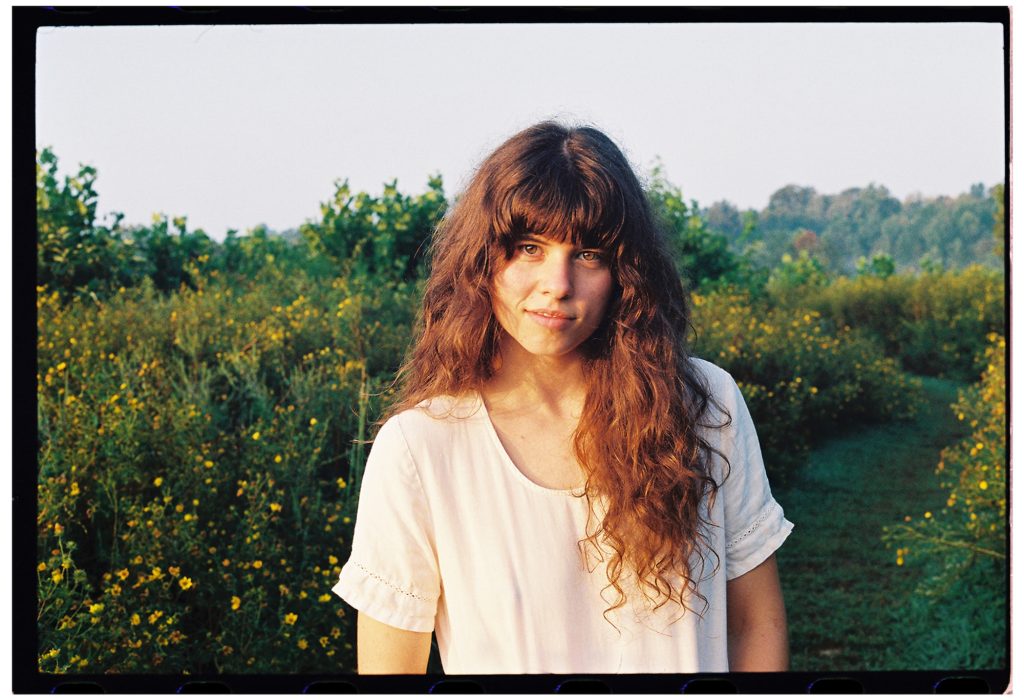
Emily Hines
Raised on a small farm where the Midwest meets the South, Emily Hines crafts earnest indie rock with a twangy, unruly air. These Days, Emily’s first album for Keeled Scales and her initial offering to a wider world, features nine songs thoughtfully recorded to cassette from a tiny house in South Nashville.
These Days traces Emily’s progression as a twenty-something seeking love and meaning in late-stage capitalism. The songs play like a stack of Polaroids on the coffee table, candid and nostalgic.
Emily wrote her first songs with her brother at the tender age of 7 as a welcome home present to their sick mother. That initial experience instilled a passion for the honesty, compassion, and transformation that songwriting can offer.
After writing most of the album during an interlude of organic farming in Ohio and Kentucky, Emily quickly began playing shows around Nashville, connecting with a warm collective of like-minded musicians that eventually led her to her producer and partner, Henry Park. This quiet blossoming of community was powerful and formative, informing her writing process and eventually connecting her to her band – a rotating cast of generously talented musicians including Liv Greene, Holden Bitner, and John-Ruben Medina. Drawn particularly to improvisation and collaboration, Hines and her band shaped the songs over countless gigs and rehearsals.
The recording process was joyful and experimental, initially with very few expectations of the outcome. Trusting the power of embodied presence in a performance, they recorded live takes of her voice and guitar to cassette, which were then layered upon by her band, who added drums, cello, and more.
The resulting collection makes for something truly special; rich and decadent but also earthy and cracked. Emily prioritized creating a recording that feels human and present, and the outcome is palpable throughout These Days. At times we’re right there in the room with Emily, up close and deeply personal, at other points it’s as if you’re straining to hear from the outside listening in; ear to the wall, notes carried and caught in the breeze.
“We were drawn to the 4-track because it constrains the urge for perfectionism and encourages authenticity to the moment,” Emily explains. “What you get is what you get, the 4-track doesn’t afford you to get surgical about the details – and that can be really freeing.”
‘Cowgirl Suit’ epitomizes that captured atmosphere, setting the tone for all that follows. Unfiltered and unvarnished, the stripped-back sound is immediately arresting, the subtle ballad weaving a mesmerizing pattern.
‘My Own Way’, the album’s opener, offers a brighter shade, a fuller sound. The shuffle of drums and weaving cello uplifts the vocal. “I was noticing myself slipping back into old routines when what I wanted was to focus on the future and rid myself of anxieties that were weighing me down. It was a reminder that there’s freedom in not knowing what’s around the corner, freedom in the things I don’t know.”
Elsewhere, ‘All Of Our Friends’ is perhaps the album’s musical centerpiece. Golden and fully-formed it feels both timely and timeless, an intimate rumination about wanting to pursue a relationship but being held back by the baggage we all carry with us. “If all of it comes out just like you intended won’t you be a little bored and wishing that it didn’t?” Emily sings, working through the anxiety of a new relationship to try and find enjoyment in the mystery.
It’s a theme that continues to raise its head through these songs; the push and pull between doing what we’re told and staying in our comfort zone, versus discovering ourselves and who we really are through the act of letting go, through choosing to be brave and embrace the unknown that hovers in the distance. As a debut album, These Days is a notable accomplishment; as a collection of heart-stirring country songs, it’s quietly, patiently, remarkable.
