


From: Portland, Oregon USA
From the misty, pine-covered hills of the Pacific Northwest hail the Bridge City Sinners. Dark Folk? Americana? Folk Punk? Pre-war era Jazz? Blackgrass? This string band bends the meaning of the word genre with their eclectic blend of styles, defying categorization.They started their journey by busking on street corners across the country and now this supergroup of musicians find themselves on the national tour circuit. But the Sinners still hold true to the DIY mentality by putting albums out on their self made record label, Flail Records. With talented musicianship and a live show full of attitude, this is one band you don’t want to miss.
Riley Downing
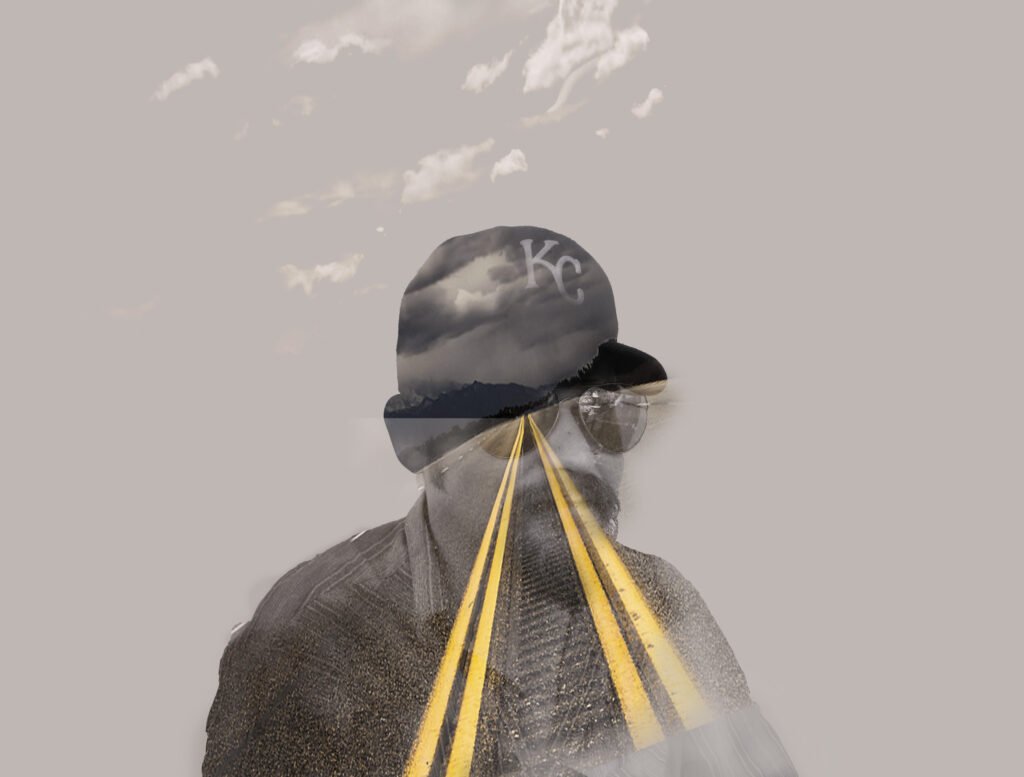
You may know Riley Downing from his work with acclaimed New Orleans combo the Deslondes, or perhaps from his similarly rootsy and wide-ranging catalog of songs with the Tumbleweeds – indeed, the Missouri-based singer-songwriter’s ability to set gripping, evocative narratives within soundscapes that weave together country, blues, folk, r&b, bluegrass, rock, soul and whatever else catches his ear is something that, once you hear it, is hard to shake free from. Same goes for that voice – deep, dusty and drawling, it’s an instrument that can stop you in your tracks with its character and expressiveness, as well as through Downing’s knack for laying out complex emotions in plainspoken, direct language.
For Downing, it all stems from an organic and intuitive approach to songwriting and playing. “I just try to write and sing about life as I live it,” he says simply. All those little bits of life are on full display on Start It Over, his first-ever solo album. From the protagonist in the opening country-soul jam “I’m Not Ready” (“Everybody’s rushin’ / I’m movin’ at my own speed”), to the cratedigger in the breezy “Start It Over” who seems as enamored of his old records as he is with his girl (“She was a 45 woman and I’m a 45 man”) to the overworked nine-to-five-er caught in a cycle of long days at work, late nights at home, followed by hungover mornings (“Long line of trouble / Troubles old and new / Once I was happy / But those days are through”) in the psych-folk lament “Crazy,” the 12 tracks collected on Start It Over unravel in a way that feels instantly relatable, as if Downing could be talking about you, me, or any one of us and doing it with the ease and empathy of a man who’s clearly been there, done that, and lived to play another day.
Following his last record with the Deslondes, Downing returned home to Missouri, helping out his brother with his plumbing business, embarking on some short solo runs and otherwise playing “mostly for old friends and old dogs and whatever other critters were within earshot,” he says. At some point, Downing and his Deslondes band mate, John James Tourville decided it might be fun to collaborate and release a 45 rpm single.
And so Downing and John James (that’s JJ to you) began a long-distance collaboration, adding longtime Deslondes producer Andrija Tokic (that’s Dre to you) into the musical chain as well. The three hashed out songwriting, arrangement and production ideas by passing demos back and forth from their respective homes – Downing in Missouri, JJ in North Carolina and Dre in Nashville – during the months of lockdown. As far as approach, everything was on the table. Downing recalls one of his demos being met with the suggestion that it needed a “Lou Reed/Fats Domino sound.” He laughs. “I couldn’t even imagine what that sounded like, but I had fun trying my best to imagine it.”
By the time the three met up, at Dre’s Bomb Shelter Studios in Nashville, everyone had been quarantined at home for two months, with nary a gig or jam session to be had. What they did have, however, was songs. And also, courtesy of Dre, a crack team of musicians. Who was along for the ride? Meg Coleman (Yola) and Jimmy Lester (Los Straightjackets, Blaze Foley) on drums, Dennis Crouch (Johnny Cash, Dolly Parton, co-founder of The Time Jumpers with Vince Gill) on upright bass, Jack Lawrence (The Raconteurs) on electric bass, Jeff Taylor (George Strait, Elvis Costello, The Time Jumpers) on keys, Peter Keys (P-Funk, Lynyrd Skynyrd) on Mellotron, Billy Contreras (George Jones) on strings, Derry DeBorja (John Prine, Jason Isbell and the 400 Unit) on Farfisa, and a host of backup singers, including Kyshona Armstrong, Maureen Murphy, Nickie Conley, Eric Brown and Vaughn Walters.
“The musicians that Dre picked out were just phenomenal,” Downing says. “They have endless amazing credits, they’ve all done great things and they were 110% in it.” So much so, he continues that “some of these songs on the record were first takes. And if they weren’t, then it was maybe take two or three.”
That first batch of tunes – five recorded in three days – included “I’m Not Ready” and “Start It Over,” as well as the strutting “Deep Breath,” the road-dog anthem “Never Coming Home,” and “Hey! Mister.” From there, the floodgates opened.
The trio continued to work together closely (but once again, from afar – there was a pandemic going on, after all) staying in constant communication to craft the next set of tunes, with Downing handling the writing and JJ and Dre working unwaveringly to bring his songs to life within vibrant and unique soundscapes. Over the summer, an impromptu road trip between JJ and Dre to transport a Hammond organ and speaker cabinet from Denver to the Bomb Shelter allowed the two to spend some additional time together doing pre-production, and they even made a quick stop in Missouri on the way back to Nashville for a quick check-in with Downing.
A month later, the three reconvened at the Bomb Shelter – this time for a relatively extravagant six days – to lay down the seven remaining songs. “I’ve known and worked with both of these guys for more than 10 years and have also lived with each at one point or another,” Downing explains of his connection with JJ and Dre. “We’re all old friends, so it was easy to get along and keep moving forward.”
Once again, the trio, along with the stellar backing musicians, captured inspiration in the moment, with JJ and Dre embellishing the tracks with all manner of instrumentation, from pedal steel, mandolin and fiddle to Mellotron, Farfisa and even guzheng (that’s traditional Chinese zither to you).
The end result reflects the mingling of past and present, traditional and unusual, that has long characterized Downing’s musical makeup. “I might be old-fashioned, but I’m not old-timey enough to not live in the modern world,” he says. Regarding his influences, Downing continues, “It’s a little bit of everything – I could probably make a long list and it’d be all over the place. I grew up going to country shows with my grandparents, but I was also angsty and played punk rock in high school. And then at the same time, I was getting into old folk and blues and stuff like that. So I never think in terms of a song having to be in ‘this’ genre or ‘that’ genre – I’m open to doing anything. I just enjoy writing and playing music.”
That joy comes through loud and clear on Start It Over, which, even in its most serious and somber moments – and also given the fact that it was recorded during a pandemic – radiates with a sincere appreciation for life and living in the here and now. As Downing puts it in “Deep Breath”: “Try to get your head screwed back on tight / Take a deep breath – it’s gonna be all right.”
This attitude, Downing says, was intentional. “There was so much going on in the world socially, politically and health-wise while we were making this record that I didn’t really know what kind of music people would even want to hear. But I knew I didn’t want to write a bunch of sad songs where you just stare at the fire and feel bad for yourself. I wanted the record to be about looking at things up on the upside – you know, ‘take a deep breath and we’ll all get through this.’ ”
As for Downing, while he may be through the recording of his first solo album, he assures that it’s certainly not his last. “I’m just going to keep working like I’ve been doing and communicating with Dre and JJ,” he says.
There’s a plan to get started on a new Deslondes record, “and hopefully by the time that’s done,” he says, “I’ll have another solo album ready to go as well.”

Roselit Bone
When asking Charlotte McCaslin to describe Roselit Bone’s new record, Crisis Actor, with one word, she responds, “fucked.”
After several years of touring the US, the band has gone from relative unknowns to somewhat cult status, having perfected an infectious and powerful live show that falls somewhere between a demented Roy Orbison and an angelic Gun Club. Their anthems of loneliness, alienation, and triumph have allowed them to artfully navigate through a cluttered underground scene, captivating audiences and transfixing crowds in a nightly conversion ritual. On their newest release, she paints a picture of a world that is truly “fucked,” lacing vignettes of systemic violence, sexual confusion, and class warfare with a wry, suicidal humor straight from the gut of America. “I didn’t see the ascendancy of fascism as anything new here, so my freshest feelings of disgust were toward anyone who could point their finger in one direction and walk away with a smirk on their face.” When asked how the punk influence fits in, Charlotte smiles, “I don’t align with any genre. For me, the essence of punk is in dealing unflinchingly with the misery and violence of lower-class city life, coming out alive, and wearing your scars proudly.”
Crisis Actor’s birth can be traced back to Charlotte’s time growing up in Southern California’s Orange County; a place where economic exploitation and casual discrimination were intertwined and buried amid a sea of sunshine and palm trees. Eventually she found punk, idolizing Los Angeles bands like X and The Cramps. Nights were spent traveling to the Inland Empire (Riverside County) to witness countless shows at the Showcase, which at times would break out into bloodbaths. It was punks on punks, cops on punks. “There was always a threat of violence from skinheads, tweakers, gangs, or the cops there.” At twenty-one, Charlotte had seen enough and ditched Southern California for the more insular Pacific Northwest, picking Portland’s grayed out radius as a welcome landing spot. “Ten years ago, it was cheap and a good place to strike out on your own,” she notes. By the time she met guitarist Victor Franco and drummer Ben Dahmes, the nucleus of Roselit Bone was born.
Fast forward seven years and two full length records later, Roselit Bone entered Supernatural Sound (Oregon City, OR) to begin tracking Crisis Actor. Charlotte would oversee the majority of the writing and production. The sessions were long, yet after only a few days, the seven piece band had recorded the bulk of the record live. It was a valiant effort to capture the manic energy of their live set which previous records had yet to fully realize. Yet by the time Noah Georgeson (Devendra Banhart, Joanna Newsom) was tapped to mix the album, Charlotte was dealing with something on a much more personal scale. She was beginning a gender transition. “There are echoes of what was to come in the lyrics of this record. I spent hours tracking the vocals on the title track, getting deeper with each take into the headspace of the toxic, angry, sexually confused person I inhabit on that song. At the end of it I was totally drained and felt an amplification of the anxiety that I came to recognize as gender dysphoria.” And with such a revelation, there follows a sense of distraction that can accompany it, one that Charlotte is quick to point out. “I don’t think people should see this album much through the lens of my transition, as it was written before I knew what was going on.”
Beyond Crisis Actor’s self deprecation and societal condemnation, there’s a sweeter side that lies just beneath a half-cocked smirk. When singing, “I hate myself and I’m at war with the world around me” on “I Pissed The Bed,” the tension between honesty and illusion is forthcoming, and ultimately points out the beauty and ugliness that Charlotte aims to document. “Sometimes I’m speaking from the most despicable part of myself, sometimes I’m trying to find common cause with people who would want me dead, sometimes I’m just telling funny stories from tour,” she freely admits. While “Proving Grounds” sends an anthemic howl across the bombed out desert with “I was glad to have been sterilized / but now I’m pissing blood,” “Laughlin, NV” blares with a tweaked out country swing that only a group of fearless misfits could attain, capsized by “Every hand’s a winner / until we’re coming down / on the Colorado River / slow dancing in the loser’s lounge.” It’s like a pair of forgotten moments from Bukowski’s Ham on Rye. In fact, it was Bukowski who once wrote, “The free soul is rare, but you know when you see it – basically because you feel good, very good, when you are near or with them.” If there is anything that encapsulates Roselit Bone, it must be this.
Crisis Actor’s arrangements are vast and ambitious, revealing a sonic, panoramic landscape where street urchins, psychedelic vaqueros, and drunken outlaws ride painted horses through a savage, dystopian, yet ultimately hopeful, punk rock future. It’s a record of layers, revealing itself more fully with each listen. Charlotte admits, “there’s a little bit of myself in every character,” and it’s precisely those characters that bring to life the record’s vision of a broken society straight from the American underbelly, one that the sprawling seven piece outfit so vividly mimics on stage. But in the end, it’s hard not to believe that this record lies somewhere within Charlotte herself, an artist on the cusp of rebirth, one that can only be described as beautifully as “fucked.” – GET LOUD

