In an era of excess and endless distraction, the New York-based singer/songwriter Margaret
Glaspy rejects the noise in favor of something far more essential. On the self-possessed title
track for her new album I Am Both Glaspy offers an ardent refusal of any outside pressure to
compromise her multidimensionality. “I wrote ‘I Am Both’ a while ago; the story is based on a
female character that I look up to deeply—a woman who contains multitudes while seeing reality
very clearly,” says Glaspy. “It can feel safer to try to fit myself into a category, but I find that
embracing my own complexity is much healthier for me.” That embrace of complexity runs
throughout the album’s eleven tracks.
In the making of I Am Both Glaspy stepped away from social media and soon discovered a
clarity of mind she hadn’t experienced in years, followed by a sustained burst of creative
momentum. As she penned her lyrics in longhand and then polished them up on a typewriter, Glaspy assembled a selection of songs that span from fictional vignettes to unguarded self- revelation to empathetic observation of the troubled world around her. Produced by Joe Henry (the three-time Grammy-winning singer/songwriter/producer known for his work with luminaries like Aimee Mann and Joan Baez), I Am Both ultimately stands as a striking new statement from one of the modern music canon’s most formidable songwriters.
“When I started writing for this record I had a goal of getting my practice back—to walk the walk
in terms of how I envision myself as a songwriter,” says Glaspy, a Northern California-bred artist
who made her debut with 2016’s lavishly acclaimed Emotions and Math. “At first it was really
hard to break that addiction to social media, but after a while something shifted. It felt like I’d
gotten back to original thought instead of being under the influence of so many outside opinions.
It was life-changing.”
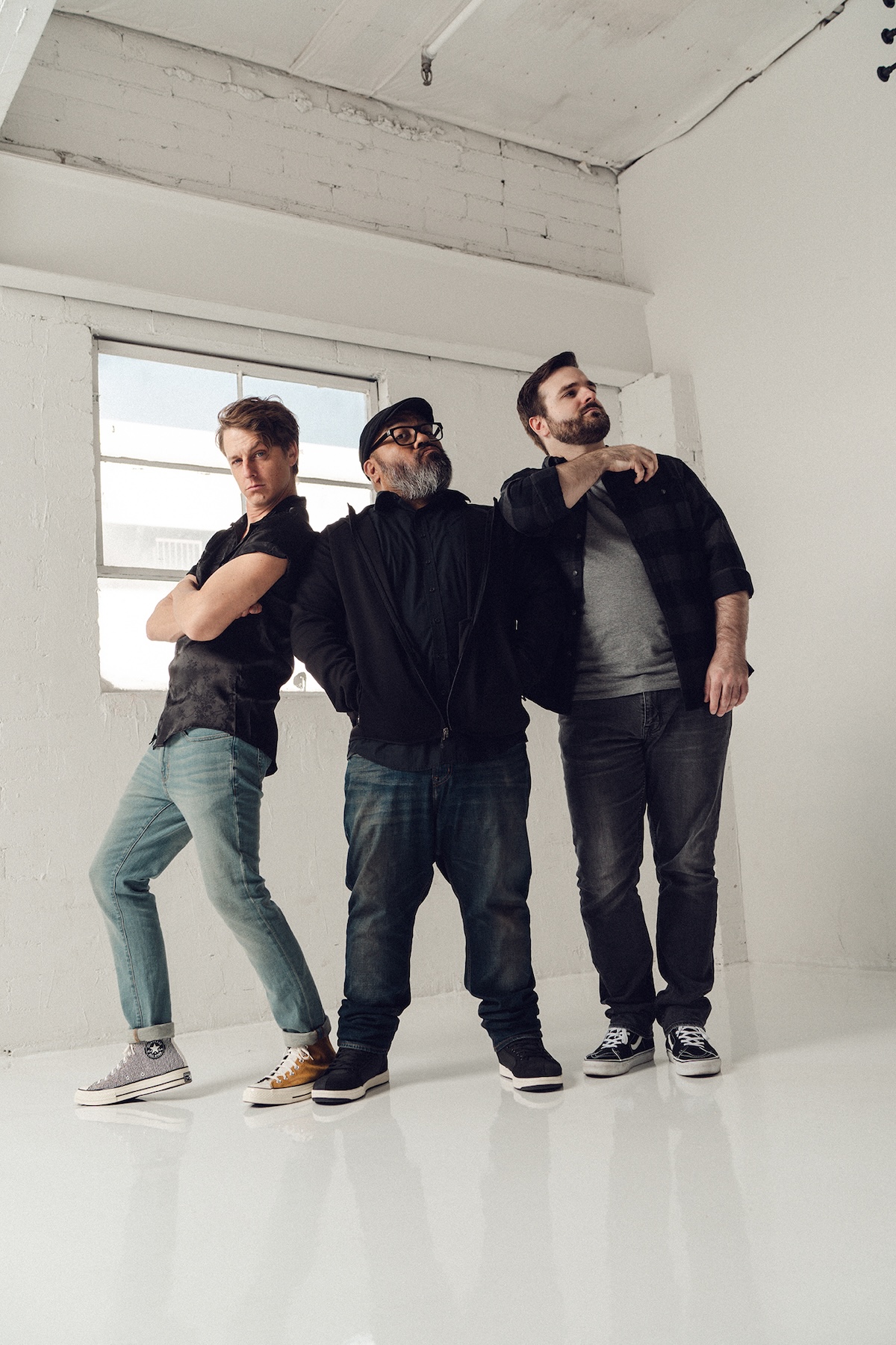
Her fourth full-length album, I Am Both emerged from three days of sessions at New York City’s
Reservoir Studios, where Glaspy recorded live with drummer/percussionist Jay Bellerose
(Bonnie Raitt, Robert Plant, Alison Krauss), keyboardist Patrick Warren (Tracy Chapman, Tom
Waits, Bruce Springsteen), and bassist Ross Gallagher (Paula Cole, Grails). “I always think of
myself as more of a photographer than a sculptor in the studio—it’s about capturing the moment
rather than layering and building things up over time, and Joe has a similar mentality when it
comes to recording,” says Glaspy, who first connected with Henry at a T Bone Burnett-curated
tribute to Bob Dylan at New York’s Town Hall in 2022. “There was an incredible chemistry with
the band and the whole process felt electric, so a lot of what you hear on the album is the first
take.”
The follow-up to 2023’s Echo the Diamond (hailed by Uncut as “songs that glint like shards of
glass yet brim with love, grief, courage, existential doubt and all the stuff that makes us
human”), I Am Both brings Glaspy’s disarmingly direct vocals and eloquent guitar work to a
cathartic form of folk-leaning indie-rock. In a potent introduction to the LP’s luminous immediacy, the album opens on “Michigan”—a lush and lacerating piece of storytelling that imagines a post-
breakup escape to the Midwest. “I was in Michigan a couple years back and had a really beautiful time, and thought about how New Yorkers sometimes fantasize about the countryside as a retreat from the intensity of the city,” Glaspy says. “It turned into a song about someone going through a bad breakup, and then deciding to just leave the city behind.”
Like “Michigan,” a number of songs on I Am Both unfold as finely detailed story fragments that
privilege impression over exposition, each one etched with a precise emotional truth. On the
wildly romantic “That Rose,” Glaspy spins distanced longing into something gloriously surreal (“I
dreamt you looked into the clouds like they were my eyes / You made them blush—the clouds
got shy”). “It was fun to write a love story where the jealousy is almost sweet.” One of several
songs featuring Glaspy’s soulful performance on harmonica, “Common Ground” tilts toward a
Dylan-esque acerbic wit. “That song feels relevant to the culture these days. There’s a tendency
to either put people on a pedestal or dismiss them entirely, instead of perceiving them as human
beings or using our own reasoning.”
Another outward-looking and galvanizing track, “Martin Luther King Jr.” reframes passages from
a 1957 sermon by the legendary civil rights leader, recasting his wisdom in light of present-day
emergencies like the U.S. housing crisis. “I’ve been listening to Martin Luther King’s speeches
for a long time, and I find so much inspiration in how transcendent his public speaking is,” says
Glaspy. “His work is obviously very pertinent to what we’re going through right now in America
and the world over.”
Throughout I Am Both, Glaspy reveals one of the more thrilling outcomes of deepening her
creative practice: a commitment to following her own internal logic when structuring songs. On
the slow-building and softly powerful “Reminder,” she contends with her own smallness against
the scale of others’ suffering, rendering her inner monologue in a rush of unbroken syntax
(“Hope can only get me so far / I also have to be willing to catch a few scars / And I also have to
be willing to apologize / And I also have to be willing to scrutinize / And I also have to be willing
to not be right / But I also have to be willing to fight, fight, fight”). “That song’s a message to
myself for when it feels like I’m doing nothing of value, reminding me that it’s important to keep
showing up in lots of little ways instead of giving up altogether,” says Glaspy. “It’s an example of
something I never would’ve written if I were still praying to the gods who told me everything
needs to be neat and tidy and symmetrical.”
That sense of self-acceptance extends beyond identity and into Glaspy’s broader philosophy:
one that increasingly resists the cultural appetite for hierarchy and ascent. “In any industry,
success is measured by climbing as high as you possibly can, but these days I think of music as
something more like a public service,” she says. “You show up in city after city and you bring the
music with you, and hopefully it reaches whoever needs to hear it. I feel really honored to be of
service in that way.”